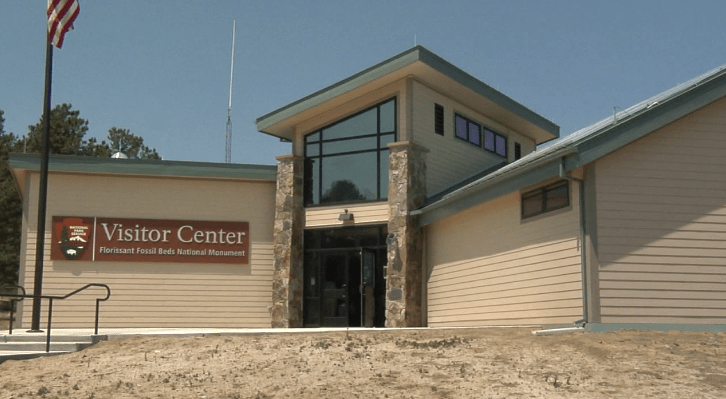

(FLORISSANT, Colo.) — Known to have “one of the richest and most diverse fossil deposits in the world,” the Florissant Fossil Beds National Monument is a place where paleontologists thrive.
According to the National Park Service, paleontologists have been exploring the area since the 1870s, “describing more than 1,800 species, making Florissant one of the richest fossil sites in the world.”
On Aug. 20, 1969, National Monument status was granted to the Florissant Fossil Beds.
“When Congress established the National Monument… the congressional legislation for this place indicated that a paleontologist was one of the most important positions to have,” said Dr. Herb Meyer.
FOX21 Photojournalist Cora Mitchell spoke with Dr. Meyer, who has dedicated his life to the area for the past 30 years.
“I applied for this position as a Paleontologist here in 1994, and became the first full-time, permanent Paleontologist, at the National Monument that year,” said Dr. Meyer, who added that maintaining the scientific integrity of the site is vital for the conservation and development of new knowledge.
“Florissant is considered a Lagerstätten, where we have, the almost complete ecosystem from the past,” said Museum Technician Conni O’Connor. Lagerstätten, as defined by the Carnegie Museum of Natural History, is “a fossil unit where fossils are preserved remarkably well.”
“Which is amazing, I mean you don’t see that in very many places,” said O’Connor. “When you find a fossil, it’s kind of like a book, you open it up [and] you have both sides.”
Dr. Meyer, who retired at the end of June, said his passion for the craft only continues to grow.
“And I’m still coming back as a volunteer completing some of these projects,” said Dr. Meyer. “The projects never stop [and] my curiosity about it doesn’t end, so as these projects go on, I am still dabbling and involved in some of the things that the Monument does here.”
To learn more about the Florissant Fossil Beds or to plan your trip, click on the National Park Service website linked above.