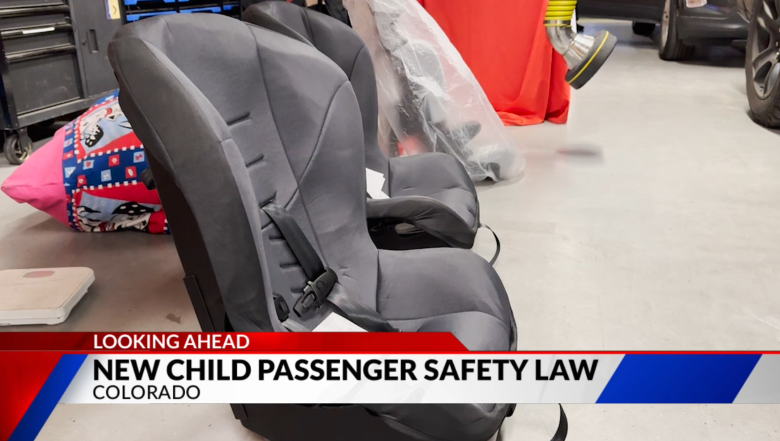

(COLORADO SPRINGS) — We are almost to the new year and with that, comes new laws. Changes to Colorado’s Child Passenger Safety law, will take effect on January 1st.
Children’s Hospital Colorado, Colorado Springs, says when they check car seats, about 80% of the time those car seats are being used incorrectly.
“Children will need to be rear facing if they’re under two years old and under 40 pounds,” said Amanda Abramczyk-Thill, the Injury Prevention and Outreach Specialist for Children’s Hospital, Colorado, Colorado Springs, “and then after they’re two years old and at least 20 pounds, and until at least four years old, they can be in a harness forward facing child restraint or a car seat. Then at four years old and pounds 40, they can be in a booster seat.”
An issue close to their hearts, as motor vehicle crashes were the second-leading cause of severe injuries for their trauma hospital patients last year.
“Both between Colorado Springs and our Aurora campus. So we definitely are advocates for finding ways to help prevent those worse injuries,” said Abramczyk-Thill, “Some of the common injuries we see in motor vehicle collisions are actually traumatic brain injuries. You can see head, neck and spine injuries. Additionally, you can see a lot of internal organ injury.”
She says common mistakes include taking a child out of a car seat or booster seat before they’re ready.
“Each child can stay in the prior stage until they reach the maximum height or weight limit. Then children have to be in at least a booster or a type of car seat until they’re nine years old. Additionally, they have to be in the rear seat of a vehicle, if available, until nine,” said Abramczyk-Thill.
To simplify, the data shows that your child should be staying in a car seat, booster seat, or the back seat, longer than we originally thought they should. Soon, the law will require you follow the new guidelines to keep kids safe.
If you’re not sure if the kids in your car are riding safely, or if you’d just like to double check, there are car seat inspection sites across the state. They’d be happy to help out and let you know free of charge.
“They need to be in a sort of child restraint, including a car seat or a booster seat for longer than some of us may realize, especially if we didn’t grow up using them. Our parents might not have had us use them,” said Abramczyk-Thill.