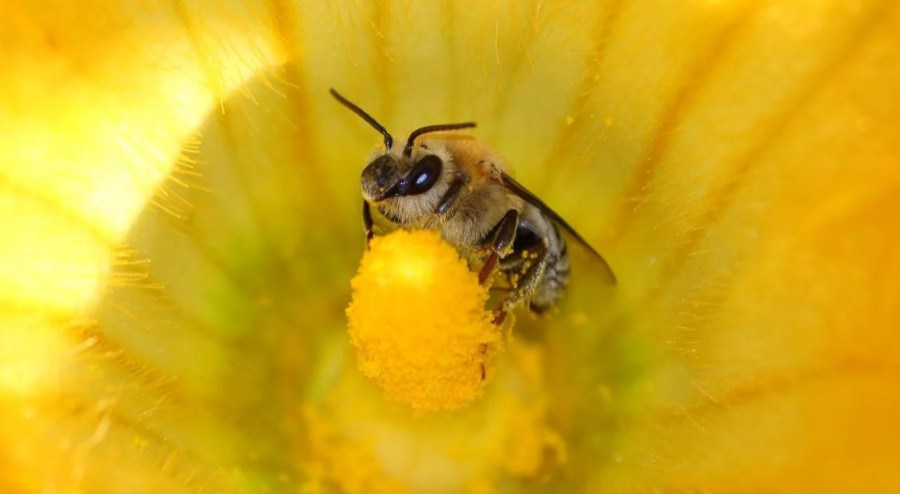

(COLORADO) — 20% of Colorado’s pollinators are now endangered, according to a new report from a research team at the University of Colorado (CU) Boulder. This decline in bee populations has prompted scientists and environmentalists to petition for Colorado’s pollinator species to get federal protection under the Endangered Species Act, according to a Jan. 25 press release.
This extensive new report shows in detail how pollinators are crucially important to the ecosystem, and affect many aspects of human life from food production to tourism. For example, industrious squash bees, native to Colorado, work behind the scenes to pollinate cantaloupe blossoms, making them a key part of the production of the famous Rocky Ford Cantaloupes.
“Our native bees have co-evolved with our native plants. We recreate in our beautiful high alpine mountains because they are covered in colorful wildflowers, which wouldn’t be there if they didn’t have our native pollinators to help them reproduce. Additionally, those native plants are integral to our rangelands, supporting over $5 billion worth of livestock across the state,” said Adrian Carper, an entomologist in the Department of Ecology and Evolutionary Biology at CU Boulder and the CU Museum of Natural History.
The report said that Colorado’s pollinator population has decreased by more than half in the last 35 years. And, Carper pointed out, this is only for the species we have good data for.
“That’s a huge alarm call,” he said.
This page from the U.S. Department of Agriculture’s website has more information on how and why pollinators are important to human life. They also provide a list of pollinator-friendly practices to help bees thrive.
But you may be wondering, is there anything you can do to support local bumblebees and other pollinators? Planting native plants in your backyard is one important way, says Carper.