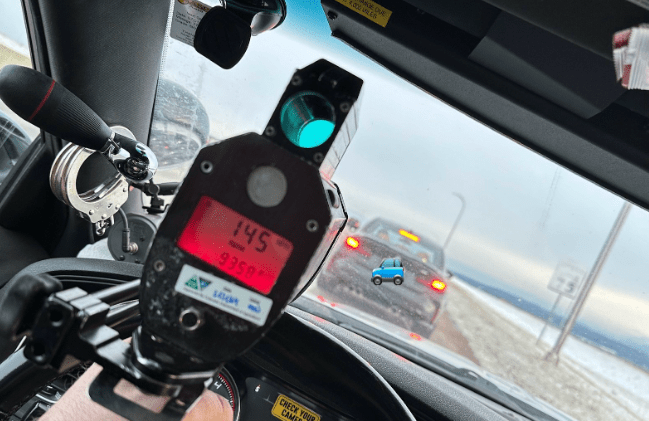

(COLORADO) — In 2024, Colorado State Patrol (CSP) troopers investigated over 560 fatal and injury crashes involving a speeding driver, making speeding the leading cause of crashes in Colorado.
“There are people out there convinced that speeding is not a public risk and simply a way for law enforcement agencies to generate revenue,” stated Col. Matthew C. Packard, Chief of the Colorado State Patrol. “While these same people want to think of their crime as a ‘technical one’, their actions increase the chance of a crash and elevate the overall damage caused. The higher the speed the greater the momentum.”
CSP said investigators examine physical evidence, such as skid marks, the extent of vehicle damage, and debris patterns, and take witness accounts to discover whether speed caused a crash. The higher the speed, the greater the chance of injury or death.
According to the Insurance Institute for Highway Safety (IIHS), the risk of severe injury or death rises sharply with each 10 mph over the speed limit. Additionally, safety features like seatbelts and airbags are less effective with increased speed.
According to CSP, drivers have less time to react to sudden changes in traffic, pedestrians, or merging vehicles when driving at higher speeds, significantly increasing the chances of collisions. Traveling at 60 mph, rather than 50 mph, cuts reaction time by 20%. Additionally, speeding makes handling turns harder and the vehicle’s stability is compromised, making it easier to lose control.
The distance required to stop increases with speed, making it difficult to avoid obstacles or make sudden stops. Just ten miles per hour can make a big difference. At 50 mph, it takes 180 feet to come to a complete stop, whereas it takes 240 feet at 60 mph.
“Speeding not only endangers the driver, but also every other pedestrian and driver in the area,” explained Col. Packard. “Rolling the dice by speeding isn’t consensual with motorists around you. It’s a violation of the law.”