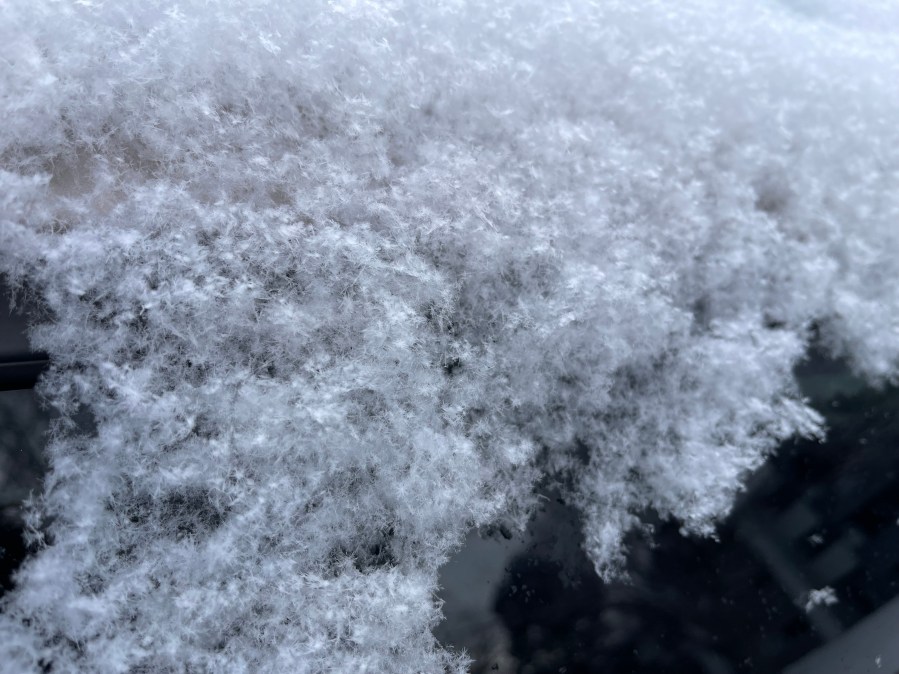

(COLORADO SPRINGS) — A few early morning flurries on Friday, Jan. 19 turned out to be a surprising amount of fluff for some across the area. Colorado Springs specifically had a highly localized amount of snow fall on top of the city. However, this wasn’t your average snow.
Colorado is well known for its fluffy snow, but this particular event brought some of the most significant numbers seen in many years. The snow around these parts is usually so fluffy because of the dry air Colorado is well known for. During the spring months, the state can get some very heavy, wet snow but that is helped along by some different processes.
Here at the FOX21 News Station, Matt Meister measured about 2.3 inches of snow on Friday morning – a pretty respectable amount from the flurries that moved through. One of the reasons we were able to measure such a high number was because of the “airy” nature of it. The snow mostly consisted of air in between flakes and ice crystals.
One of the tools meteorologists use to determine just how fluffy (or wet) snow is, is a “snow to liquid ratio.” Put simply, how many inches of snow does it take to get one inch of liquid?
If the snow to liquid ratio is higher, such as 20:1, then the snow is very fluffy and dry – devoid of a lot of moisture. If the snow to liquid ratio is lower, such as 5:1, then the snow is very wet and heavy – think springtime snowstorms.
The National Weather Service noted that the snow to liquid ratio Friday morning was actually closer to 150:1 which would make it some of the fluffiest snow seen here in recent memory.
That means that if we took 150 inches of the dry snow and melted it down to a liquid, we would still only get one inch of water. Numbers that significantly dry don’t come around often, even in Colorado.
The National Weather Service also notes a few different variables that can influence the snow to liquid ratio within a snow event:
How warm the air is from the snow-producing cloud to the ground
How much ice there is in a snow-producing cloud. A higher amount of ice crystals will lead to higher snow ratios
Wind can also influence the structural integrity of each flake. If it’s too windy, the snowflakes and ice crystals can break apart