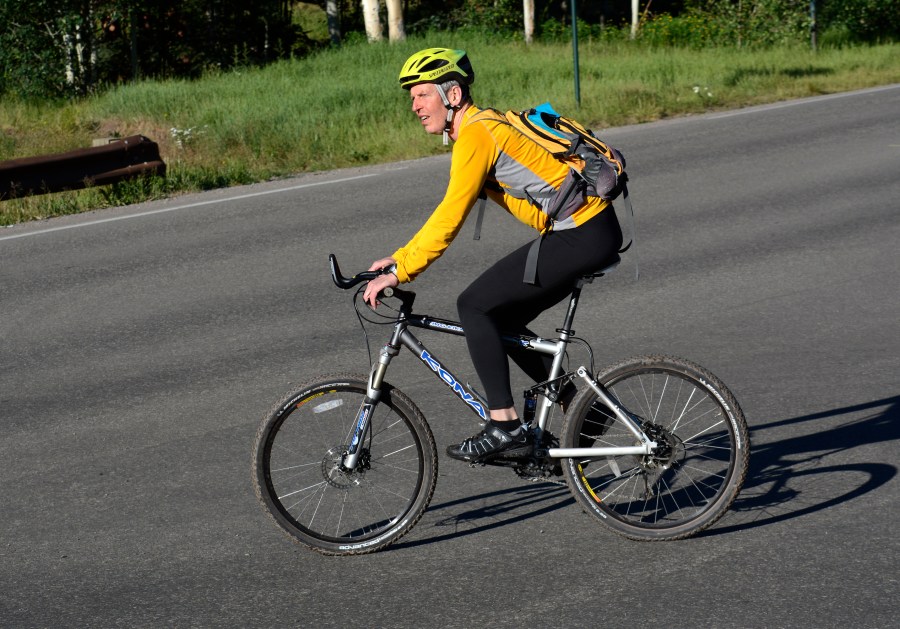

(COLORADO SPRINGS) — Warmer weather means that people are out and about more, whether walking, jogging, or riding bicycles. This means that motorists will see more bicyclists on the streets, and so the Colorado Springs Police Department (CSPD) shared some reminders on how to safely share the roads.
According to CSPD, drivers should:
Give bikes at least 3 feet of space when passing a bicycle, even if they are in a bike lane, and only pass when it’s safe for both the vehicle and the bicycle, as you would with any slow-moving vehicle.
Be aware of approaching bicycles by checking mirrors and blind spots, especially when preparing to turn or open a car door.
Always be patient, as cyclists share the same rights on roads that drivers of motorized vehicles have. Slow down and follow at a reasonable distance until it’s safe to pass.
The Colorado Department of Transportation (CDOT) also emphasizes that bicyclists share the same rights, but reiterates that they also share the same responsibilities as vehicles when on the road.
CDOT lists the rules of the road for bicyclists as:
Ride in a straight line – When bicyclists ride predictably, it makes them more visible. Bicyclists should not weave in and out of parked cars, or back and forth from crosswalks or sidewalks into the road.
Ride on the right – this doesn’t mean hugging the curb or edge of the road. Ride as far right as possible while still being safe from debris, obstacles, and traffic.
Know when to take a lane – A bicyclist may take up a lane to travel in when traffic is slow and the lane is narrow, there is no shoulder or bike lane, when approaching an intersection, or if moving at the same speed as the flow of traffic.
Ride Single-file – When riding with a friend or group, riding single-file provides more room to maneuver and allows other bicyclists and motorists to pass.
Use hand signals – Use the proper hand signals to indicate when you are making left or right turns and when stopping. When turning, bicyclists must continuously signal for at least 100 feet before the turn and while stopped and waiting to turn, unless the hand is needed to control the bicycle.
Follow lane markings – When approaching an intersection with several lane choices, bicyclists should choose the appropriate lanes just as motorists do.
Watch for road hazards – When riding on the roads, bicyclists should watch for hazards, such as sewer grates, railroad tracks, and parked cars.
Don’t assume right-of-way – A bike rider’s first responsibility is to avoid a crash, and so they shouldn’t assume they have right-of-way. Learn the rules of when to yield in the “Rules of the Road” document, here.
Know the three correct ways to make a left turn: For illustrations of the following options, click on the link above.
Like a motor vehicle: When a bicyclist is making a left turn in the same manner as a motor vehicle, they should signal the intention to make a left turn, look behind to ensure it is safe, move into the left lane or center turn lane, and yield to cars in the oncoming lanes before turning.
Like a pedestrian: Bicyclists choosing to make a left turn like a pedestrian should ride straight through the intersection to the far crosswalk, stop, dismount, and position the bike in the new direction. They should then yield to oncoming traffic or wait for the crosswalk signal to change before walking the bike across the intersection.
90 Degree or “Inverted L”: A third way for a bicyclist to make a left turn is similar to the pedestrian method, but keeps the bicycle on the street. When doing so, the bicyclist should ride straight through the intersection to the far corner, stop, and position the bike in the new direction. After yielding to oncoming traffic or when the signal turns green, the bicyclist should ride the bike across the intersection.
The bottom line for anyone who shares the roads is to be patient, be respectful, and don’t be a road hog.