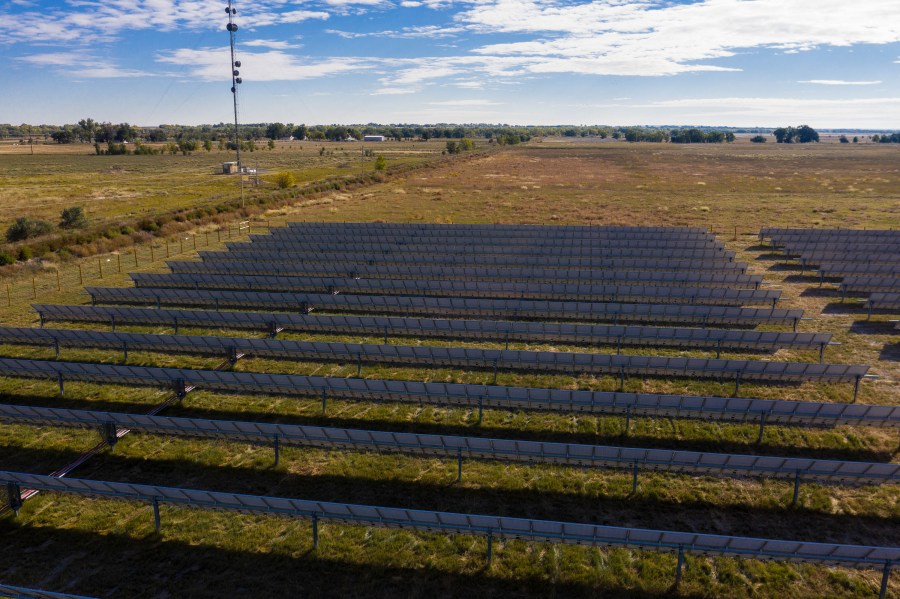

(PUEBLO, Colo.) — Black Hills Energy announced on Thursday, April 18, that it plans to add 400 megawatts (MW) of new renewable energy resources to advance its 2030 Ready Clean Energy Plan.
Plans for added resources include utility-scale solar and battery storage projects to be constructed in Pueblo County and a wind energy project in northeastern Colorado.
One of the proposals in the Clean Energy Plan is to implement resources that reduce greenhouse emissions by 89% in a cost-effective manner by 2030. This includes adding 200 MW of utility-scale solar, 150 MW of wind energy, and 50 MW of battery storage, supported by the company’s existing, dispatchable generation assets. If approved, these assets are planned to be in service by the end of 2027.
“Our most important job is to deliver safe, reliable energy to the Southern Colorado customers
and communities who depend on us,” said Campbell Hawkins, Black Hills Energy’s vice
president of Colorado operations. “We’re pleased to present a Clean Energy Plan that is
grounded in this commitment to our customers and builds upon the work we’ve already done to
make our power generation among the cleanest in the state.”
An additional benefit of the plans is that with the installation of the added sustainable energy resources, customer cost-savings over ten years, resulting from the Inflation Reduction Act (IRA) tax benefits are estimated to be $270 million.
If approved, Black Hills Energy will add the Clean Energy Plan Rider (CEPR) to customer bills beginning January 1, 2025. This will equate to 1.5% of the total annual bill, or about $1.50 per month for the average residential customer. This surcharge is needed to help pay for the related expenses and capital investments required to implement the Clean Energy Plan and is allowed by Colorado state statute.
“We’re very aware of the impact of energy costs on our customers, and we are taking steps to
minimize the customer bill impact of implementing the Clean Energy Plan,” said Hawkins.
To offset the new monthly CEPR, the company proposes to reduce the monthly Renewable Energy Standard Adjustment (RESA) rider from 2% to 1.5%. The company will generate less electricity from natural gas-fired generating units as more renewable energy is added to the system. This will lead to fuel cost savings to customers through a lower Energy Cost Adjustment (ECA).
For more information about Black Hills Energy’s Clean Energy Plan, visit https://www.blackhillsenergy.com/2030-clean-energy-plan.