
(COLORADO SPRINGS) — Cheyenne Mountain Zoo’s (CMZoo) members are taking the joys of birdwatching to another level, and helping conservationists learn more about the migration of different bird species.
In March 2023, as part of the annual CMZoo Member Conservation Vote, members chose to fund the purchase and installation of three cutting-edge technology bird-tracking towers that will support a growing global network of conservationists. To understand birds’ obstacles and declining populations, scientists need to study their migration paths, stopover sites, summer breeding and over-wintering locations.
CMZoo said birders have tracked bird movements for decades by banding and releasing individual wild birds and hoping to catch them again later to document their ages and locations. While it is and has been a beneficial science, it provides data based on single moments in time, rather than providing a full picture of a bird’s migration and movements.
With the Motus Wildlife Tracking System (Motus), unassuming towers and tiny bird ‘backpacks’ work together to collect ongoing data via radio telemetry, the Zoo said. The lightweight and unobtrusive tracking ‘backpacks’ come in a variety of sizes fit for birds, bats, and butterflies – and some are even solar-powered. Conservationists just need to catch a bird once to attach a tracker that ‘pings’ the towers when it flies by. The towers are peppered across North, Central and South America and in several parts of Europe, Australia, Africa, and Asia.
“Colorado and the Rocky Mountain corridor have some Motus towers, but not as many as other migration flyways,” Rebecca Zwicker, animal care manager at Cheyenne Mountain Zoo. Zwicker and other CMZoo staff presented the Motus tower project for members’ consideration in 2023. “If you build it, they will come. We need more towers to encourage researchers to put the backpacks on the birds. Without more receiver towers, it’s not worth tagging the birds with these state-of-the-art trackers. We’re really looking forward to seeing our first backpacked bird’s data pop up on our tower – hopefully by this spring during the Great Migration.”
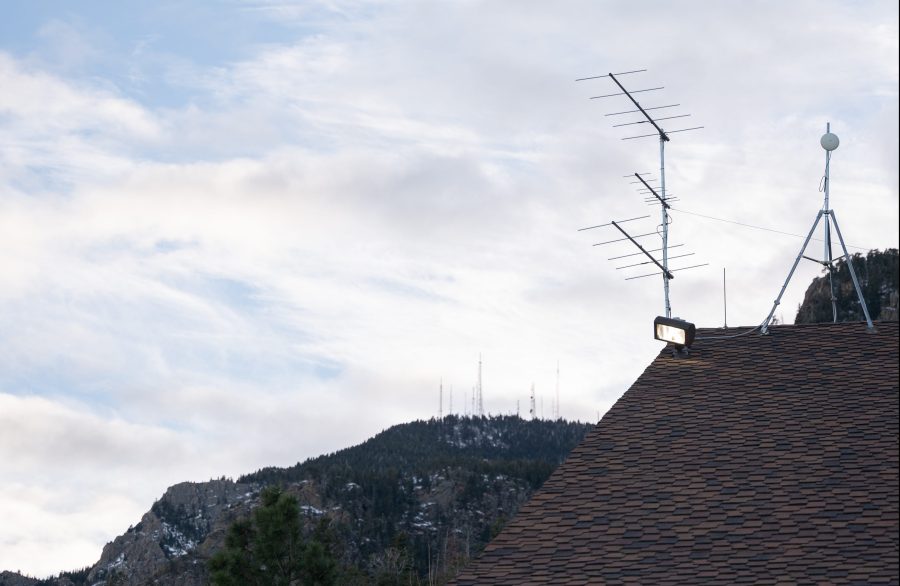
Members funded the purchase and installation of three Motus receiver towers. The first CMZoo member tower – a 10-foot tall mast with two perpendicular antenna facing Colorado Springs from the Zoo – is reminiscent of an old-school TV antenna. It is a permanent structure on the south side of the Lodge at Moose Lake.
Each tower can track a 5- to 8-mile radius of birds carrying the Motus telemetry tags. The second CMZoo member-funded tower will soon be installed at Fountain Creek Nature Center, so the two towers’ tracking radiuses should overlap. The third tower will later be installed in an undecided location, once CMZoo conservationists learn best practices for the first two towers.
The Zoo said it does not have current plans to band or ‘backpack’ any birds and will leave that to the wild bird banding experts. CMZoo said its strength as a conservation advocate lies largely in its ability to reach so many people with opportunities to support conservation partners and collaborative efforts, like Motus. By adding more towers to the fledgling Colorado network of receivers, Zoo members are helping lay the groundwork for enormous progress in bird protections.