
DENVER (KDVR) — A new Colorado Water Conservation Board report shows that the state’s average annual temperature has risen by 2.3 degrees in 42 years, and is now about 1.5 degrees above the baseline climate temperatures for the region.
While this might not sound like much, the average temperature from 1971-2000 was 45.1 degrees, and the average state temperature from 2001-2022 was 46.5 degrees.
“With continued warming over the next few decades, the future temperatures at every location in Colorado will become more like those currently experienced in places that are to the south, or lower in elevation,” the report stated.
The report, released by the Colorado Water Conservation Board and Colorado Climate Center and sponsored by CWCB and Denver Water, included information describing recent trends in Colorado’s climate and hydrology and additionally interprets the model-based projections of future climate and hydrology.
The report takes into account varying levels of human influence, i.e., emissions and other climate issues that affect global warming. Researchers also broke down what temperatures and climate within Colorado could look like, comparing projections for Denver to other warmer cities and towns further south.
If there are 2 degrees of further warming, seasonal temperatures for Denver would become more like the current temperatures in Pueblo.
With 4 degrees warming, Denver’s temperatures would be similar to Lamar’s current temperatures.
With 6 degrees of further warming, Denver’s temperatures would be slightly warmer than the current temperatures in the warmest parts of the lower Arkansas Valley (Las Animas and La Junta), and similar to Albuquerque, New Mexico.
The comparison is only through temperature, and not precipitation.
“Denver is very unlikely to experience a large decline in precipitation that would make the overall climate like Albuquerque’s, even with 6 degrees of warming,” the report added.
However, current climate predictions show these types of temperatures in Denver could occur by 2050. By that time, the report found, the state could have an average annual temperature over 5.5 degrees higher than the 1971-2000 “baseline” temperature.
Precipitation continues to drop during 21st century
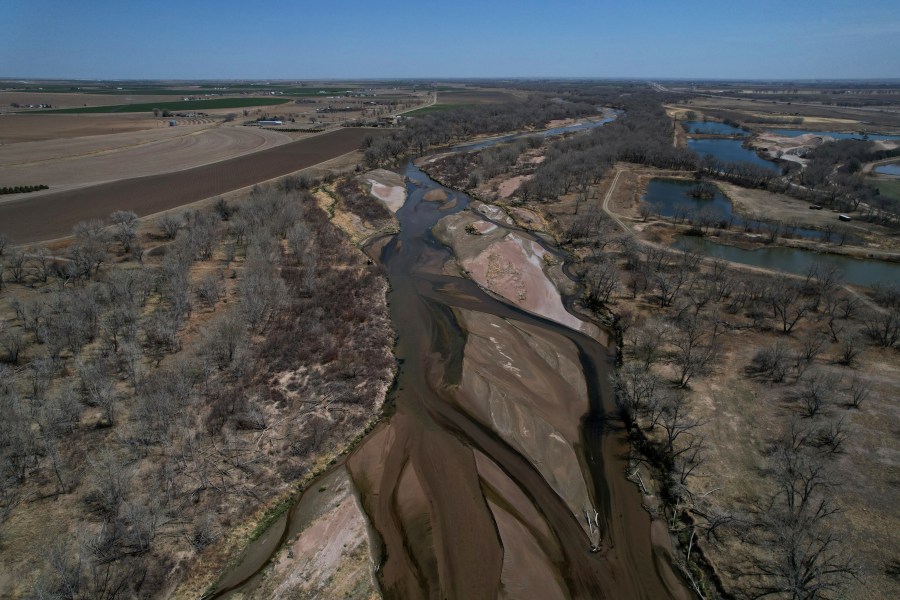
The report observed that Colorado has had “persistent dry conditions” since 2000. According to water year (which begins/ends on Oct. 1-Sept. 30) precipitation accumulations, four of the five driest years in history have happened in this time.
Northwest Colorado’s summer precipitation has dropped 20% since the 1951-2000 period, and Southwest Colorado’s spring precipitation dropped 22% from what was recorded in 1951-2000.
While temperature models show clear predictions for future weather trends, precipitation models are less clear, according to the report. However, most models project increased precipitation, including snow and ice, during the winter (December through February).
But the models don’t agree as well for other seasons. There could be a potential for large decreases in summer precipitation, as much as 10-25% less.
“April 1 snow water equivalent (SWE, also known as snowpack) during the 21st century has been 3% to 23% lower than the 1951-2000 average across Colorado’s major river basins,” the report noted.
Another factor previously not focused on is “dust-on-snow” events, which cause earlier melt and runoff, the report said, and may reduce the annual runoff.
The report also said the seasonal peak of the snowpack is projected to shift earlier. How much earlier ranges from a few days to several weeks by 2050, depending on the amount of warming and the precipitation change. The report also noted that the warming-driven shift could be accelerated by increases in dust-on-snow events.
Temperature will be a leading factor in Colorado’s spring snowpack, the report stated. It went on to note that most climate model projections of the April 1 snowpack in the state’s major river basins show 5-30% less snowpack by 2050 compared to 1971-2000.
“(T)he individual projections that show increasing snowpack assume large increases in fall-winter-spring precipitation,” the report said.
Temperatures continue to rise, highest during fall
Only one year since 2000 has been cooler on average than the 1971-2000 average temperature, the report found, and 2012 remains the state’s warmest year in the 128 years of record keeping.
By 2050, Colorado’s annual temperatures are projected to warm by 2.5-5.5 degrees compared to the 1971-2000 baseline, the report found, and the state has already warmed by about 1.5 degrees beyond the baseline.
The greatest amount of warming in recent decades has occurred in the fall, with statewide temperatures increasing by 3.1°F from 1980-2022.
“While the magnitude of warming is uncertain, by 2050, Colorado’s average annual temperatures will likely match or exceed the very warmest years of the past, bringing large changes in the frequency and severity of heat waves,” the report explained.
Southwestern and South-central Colorado, particularly the San Luis Valley, have experienced the largest magnitude of warming, with some areas increasing as much as 3.5 degrees in the fall.