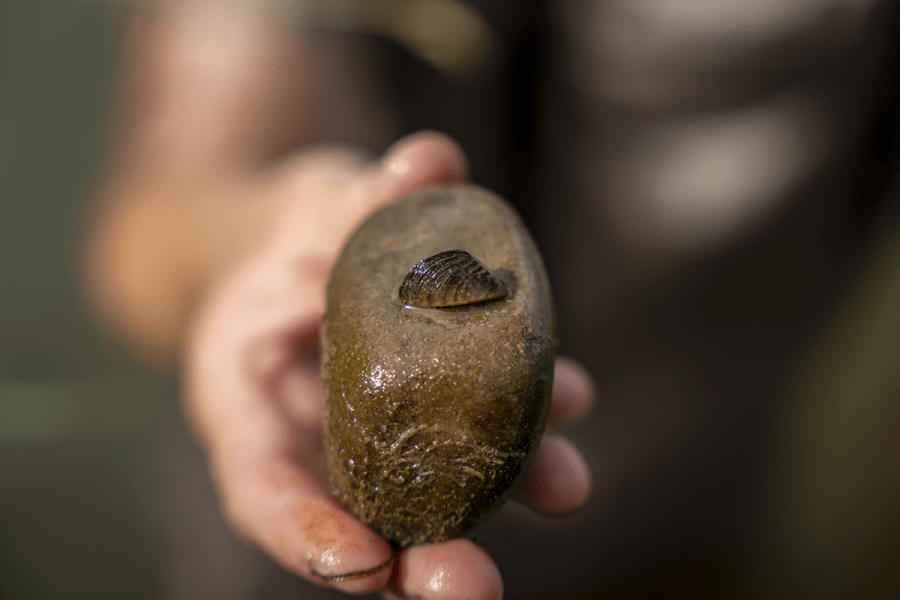

DENVER (KDVR) — Colorado Parks and Wildlife officially declared a portion of the Colorado River as “infested” with invasive zebra mussels after sampling detected adult zebra mussels in the river and another nearby lake in Grand Junction, CPW announced in a press release on Monday afternoon.
“While this is news we never wanted to hear, we knew this was a possibility since we began finding veligers in the river,” said CPW Director Jeff Davis in the press release. “I can’t reiterate this enough. It was because we have a group of individuals dedicated to protecting Colorado’s water resources that these detections were made.”
On Aug. 28, the Aquatic Animal Health Lab suspected veligers, the microscopic larval stage of zebra mussels, were collected from West and East Lake, west of 31 Road, within the Wildlife Area Section of James M. Robb-Colorado River State Park.
On a follow-up a couple of days later on Sept. 2, staff returned and discovered suspected adult zebra mussels in the lake, which flows into a section of the Colorado River through a side channel.
On Sept. 8, the Aquatic Animal Health Lab confirmed the samples collected from the Colorado River and the nearby lake were adult zebra mussels.
The presence of the zebra mussels makes the Colorado River a designated “infested” body of water from 32 Road to the Colorado-Utah border. This is the first time the river has had zebra mussels in it.
Water is determined to be infested when an invasive species is successfully able to reproduce in it.
Bodies of water that are infested include:
Highline Lake at Highline State Park: 2022
Mack Mesa Lake at Highline State Park: 2025
West and East Lake at the Wildlife Area Section of James M. Robb-Colorado River State Park: 2025
Colorado River from 32 Road bridge downstream to the Colorado-Utah border: 2025
Private body of water in Eagle County: 2025
CPW will work to contain the zebra mussels to the infested waters.
“We won’t give up,” said CPW Invasive Species Program Manager Robert Walters. “Our priority remains utilizing containment, population management and education to protect the uninfested waters of the state.”
CPW said it will not treat the infested waters from the mainstem of the Colorado River for reasons, including:
Risk to native fish populations
Risk to critical habitats
The length of the potential treatment areas
Complexity of canals and ditches fed by the Colorado River
To reduce the spread of the invasive species, CPW is asking anybody who may have nearby, private bodies of water, or people who draw water from the Colorado River, to report anything to the agency at [email protected] so they can sample it.