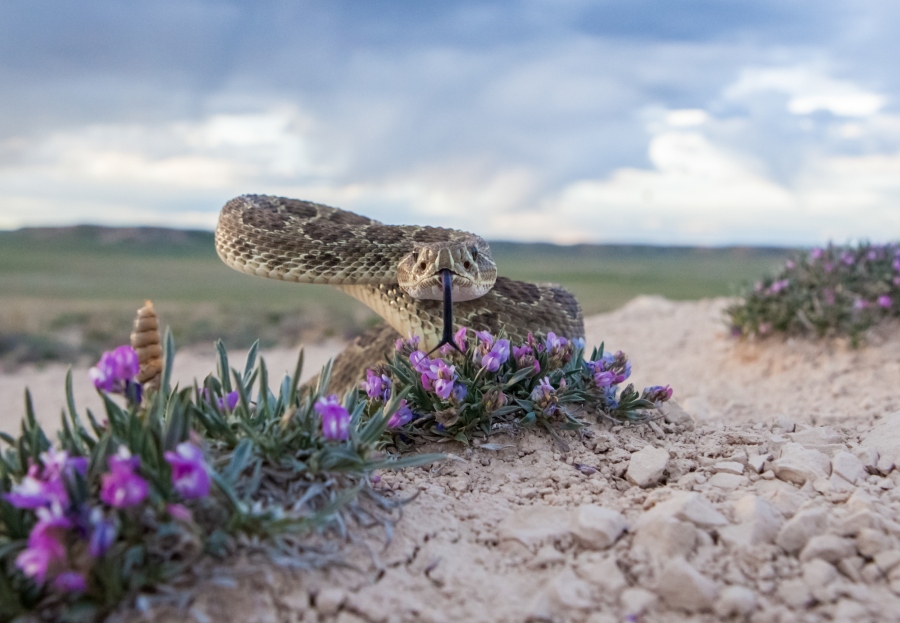

(GOLDEN, Colo.) — Colorado Parks and Wildlife (CPW) is sharing important information about rattlesnakes after an 11-year-old was recently bitten by a rattlesnake and survived during a biking accident near Golden.
CPW said rattlesnakes have an elaborate defensive strategy, seeking to avoid the need for a venomous bite if possible, and usually will not strike unless threatened or deliberately provoked.
CPW shared some information about the ecology and behavior of rattlesnakes to help people avoid unwanted encounters:
Rattlesnakes are not built for speed, waiting in the same locations for hours, or days for a prey animal to walk by. Because of their slow speed, rattlesnakes will usually stand their ground when threatened.
Rattlesnakes use camouflage to blend in with their surroundings and in most cases will ignore people, thinking you cannot see them.
If a snake coils up or makes a rattle noise, you are too close and should move away slowly. Stepping back just a few feet can convince the snake you are not a threat.
Rattlesnakes shelter in winter dens during the coldest months and resume activity in April or May, migrating several kilometers in search of food.
Snakes are often seen during the spring and fall when cool temperatures require them to bask in the sun on warm surfaces such as pavement or rocks near trails or roads.
Hunting usually occurs in the late afternoon and evening once the snakes have warmed up their bodies. When temperatures allow, rattlesnakes may also prowl for food in the early afternoon or at night.
CPW said to always be aware while hiking to avoid dangerous encounters.
CPW wants hikers to remove earbuds or headphones so hikers can listen to the rattlesnake’s distinctive rattle. Hikers should also watch out for snakes that are warming themselves in open sunny areas such as pavements, rocks, trails, or roads. CPW also advises hikers to watch where they place their hands and feet and to avoid areas sheltering a rattlesnake.
CPW said if you encounter a rattlesnake, you should freeze, as normally a rattlesnake is heard before they are seen and freezing allows you or a companion to locate them before backing away. CPW recommends hikers back at least five feet away out of reach of a rattlesnakes strike. CPW also said to leave the rattlesnake alone as one-third of bites are due to people trying to handle or kill the snake.
In order to keep pets safe, CPW said to keep pets on a six-foot leash while walking, and that dogs, in particular, are curious animals that ignore a snake’s defensive posturing. If you live in an area where rattlesnakes are common, CPW advises pet owners to remove rock piles and grassy areas and to inspect the area before letting their pets roam.
If your pet is bitten, seek immediate veterinary care and call the clinic ahead of time.
CPW said in the event of a bite, you should never:
cut and try to extract venom
use ice, heat, or a tourniquet
try to capture or kill the snake
If you or someone else is bitten, CPW said to call the poison Center at 1-(800) 222-1222 for instructions then go to the nearest hospital, remove any jewelry and tight-fitting clothing, and stay calm and avoid excess movement.