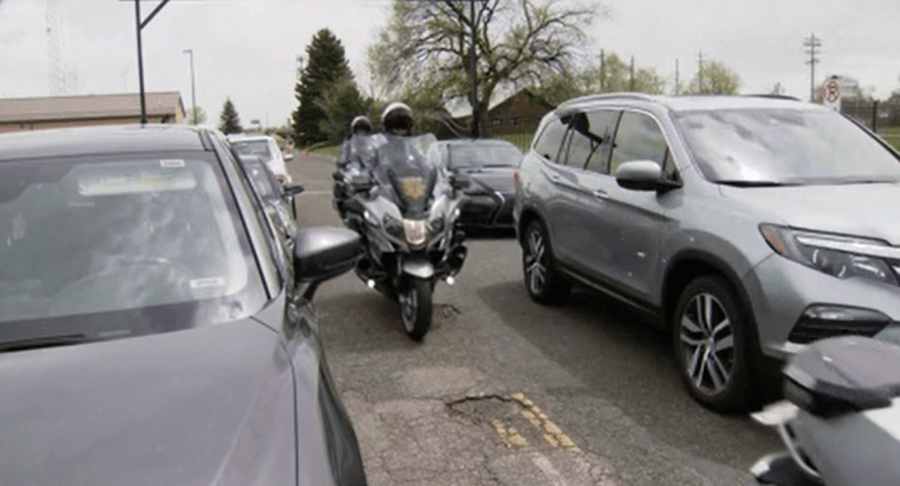

(COLORADO) — A year after lane filtering was legalized in Colorado, the Colorado State Patrol (CSP) is encouraging motorcyclists to evaluate each unique traffic situation and consider their safety above all else, with a reminder of when it is safe to proceed.
“The top benefit of lane filtering is to reduce the likelihood of riders being struck from behind while traffic is stopped; however, we don’t want riders to expose themselves to a new risk by filtering when it is simply not safe to do so,” explained Col. Matthew C. Packard, chief of the Colorado State Patrol.
According to CSP, it is safe to filter when:
A rider feels in control of the motorcycle and can filter in a safe environment.
All surrounding vehicles are at a complete stop.
The lane is wide enough to accommodate both the motorcycle and the vehicle being passed.
The rider has clear sight lines.
CSP states that it is not safe to filter when:
The rider doesn’t feel confident or safe.
The surrounding vehicles traveling in the same direction as the rider are still moving.
Drivers traveling in the same direction are behaving erratically or aggressively.
The lanes are too narrow to accommodate both the rider and the vehicle.
Weather conditions are poor, or visibility is reduced by heavy rain, snow, or fog.
Large vehicles are in the lane ahead, creating large blind spots.
“We always recommend riders, regardless of how many years they’ve been on a motorcycle, to take a skills refresher course like those offered by MOST,” said Packard. “Learn the new laws and practice skills in a controlled environment.”
According to CSP, riders should always use their signals to alert drivers that they are about to filter and should be prepared to stop if necessary.
“Staying focused and being aware of your surroundings is key to keeping yourself safe,” said Packard.