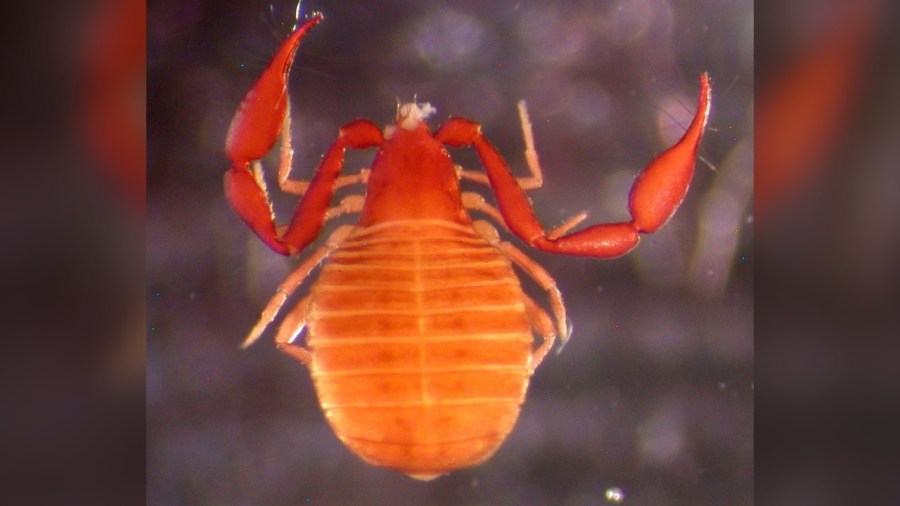

DENVER (KDVR) — One family found a new species the size of a sesame seed in Boulder, making it the only place in the world where the species is known to live.
The initial discovery dates back to 2008 when David Steinmann, a research associate at the Denver Museum of Nature and Science, set off to the foothills with his wife, Debbie, and son Nathan.
But this wasn’t the average family hike.
The museum said the family went looking for invertebrates in a small cave west of Boulder, known as Mallory Cave, which is where David spotted pseudoscorpion “clinging to the bottom of a jagged stone.”
David sent the species off to a pseudoscorpion expert in Australia who determined this tiny being was the first of its kind to be discovered, thus creating a new species.
The pseudoscorpion was named “Larca boulderica,” which the museum said was named after Boulder.
“Pseudoscorpions are fascinating creatures. They look like tiny scorpions without a stinger. Few people encounter them, and even fewer find them in caves,” Frank Krell, senior curator of entomology at the museum, said in a press release. “David Steinmann has found many tiny creatures in Colorado caves that nobody has found before. The city of Boulder is now immortalized in the name of this new species.”
The species was recently published in ZooKeys, which describes it as the sixth cave-adapted species of the Larca genus from caves in North America.
According to the museum, the tiny species has “crab-like pincers” and survives in dry, dusty habitats – currently only found in Boulder.
Now, the species description is being used in an arachnology collection at the museum.