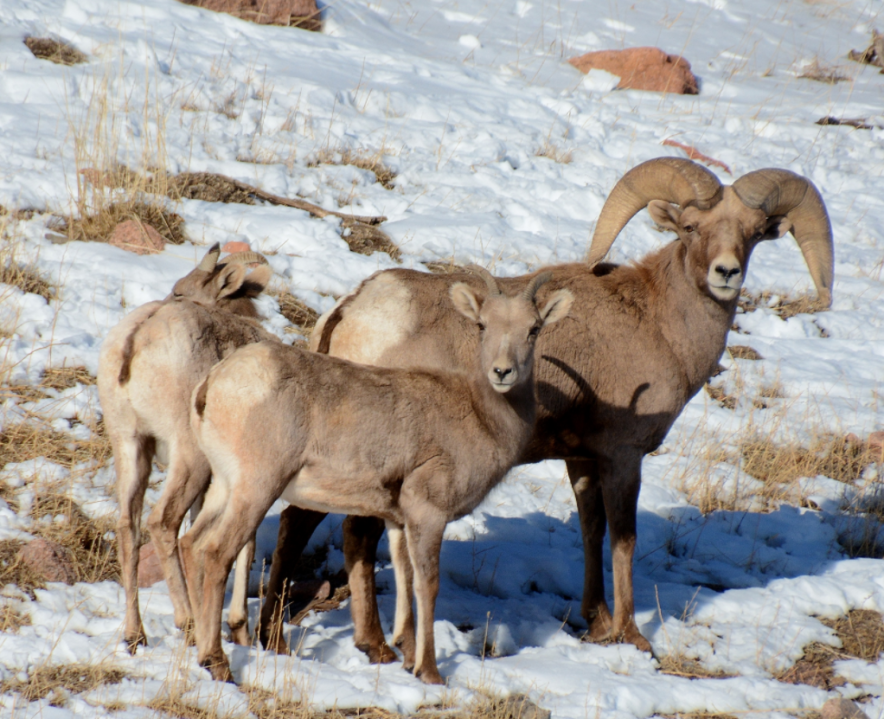

COLORADO SPRINGS – Some of the largest and strongest sheep in the world call Southern Colorado home. The rampart range herd hangs out in some of the canyons around Colorado Springs and the Garden of the Gods.
On Saturday, the city park celebrated the historic herd with its 17th annual Bighorn Day. Educational and fun booths were set up throughout the Visitor Center. There was also a wildlife viewing station set up on the terrace of the Visitor Center so attendees could see the herd of Bighorn Sheep.
That herd wasn’t originally supposed to be in Colorado Springs. Park Leaders say in the 1940s; the sheep were being relocated to Pikes Peak when the truck transporting the herd broke down near Green Mountain Falls. The people transporting the herd let them loose, assuming they would head up to America’s mountain. Instead, the group headed toward Colorado Springs in the opposite direction. Eventually, the group settled near Queens Canyon.
It’s growing strong now, and you can catch the herd around the park. Park Officials say their appearance is often causing “ram jams” as visitors stop to get a look at their cars. But wildlife experts say people need to keep their distance to keep them around.
“The biggest thing is if you’re changing the animal’s behavior, you’re too close and need to back away,” said Brett Tennis, the park’s operations administrator at Garden of the Gods.
“We want them to be in their natural habitat and feel safe in the park so other people can enjoy watching them.”
A good rule of thumb from Bret is that if you put your thumb over an animal you see, you should cover it with your thumb. Otherwise, you’re too close.
Facts about Big Horn Sheep
Colorado is home to the largest population of the species anywhereThe massive, coiled horns of mature rams may make up to 10 percent of the body weightRams battle each other, cracking horns, to test dominance within the herdOnly a small number of the native sheep remained in Colorado in the early 1900s.Since Colorado’s restoration efforts began, CPW has completed more than 100 bighorn sheep transplants, most of which took place in the 1970s and 1980s.Colorado’s iconic bighorn sheep are once again abundant with an estimated statewide population of 7,000 animals.