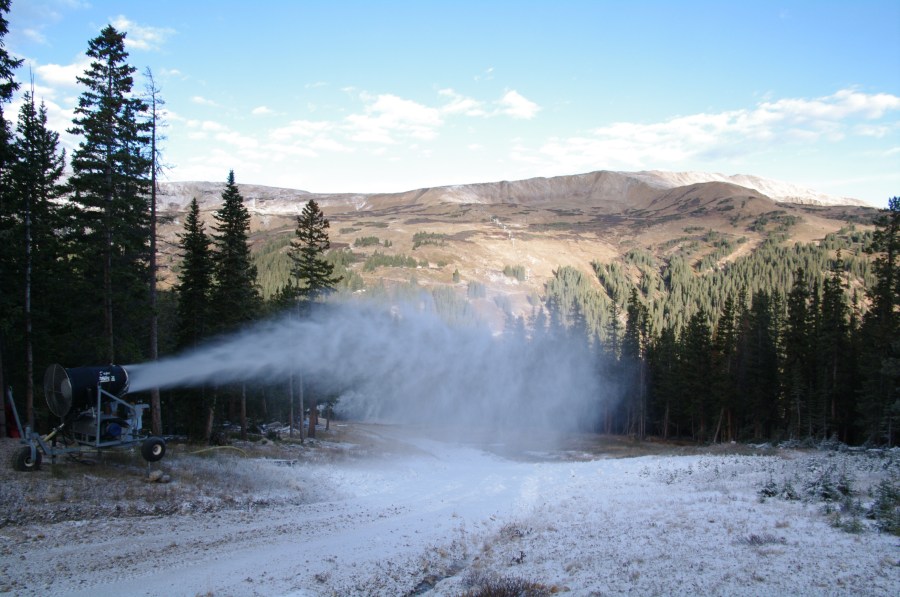

(COLORADO) – As cooler temperatures settle in, ski towns across Colorado are kicking off one of their most important traditions: snowmaking. This process allows resorts to get an early start on the ski season, ensuring that slopes are ready for visitors even before the first big winter storm arrives.
At Loveland Ski Area, crews have been busy using a variety of high-powered machinery and equipment to produce artificial snow. While it may look like magic, snowmaking is actually a core meteorological process that depends on specific atmospheric conditions.
So, what exactly is snowmaking? It’s the creation of snow by spraying tiny droplets of water and compressed air into cold air. Those droplets freeze before hitting the ground, forming snow that’s very similar to what falls naturally. However, this can only be done once conditions are cold and dry enough, which is typically in the fall, because snowmakers rely on real atmospheric conditions, not refrigeration systems or other artificial ingredients.
The key to determining when snowmaking can begin lies in something called the wet bulb temperature, which combines air temperature and humidity (measured by the dew point) to indicate how efficiently water can freeze. For snowmakers, an ideal wet bulb temperature is around 27°F or cooler, allowing them to produce snow with the best consistency and quality.
Resorts turn to snowmaking not only to prepare for the season but also to create a solid base layer of snow. This foundation helps natural snowfall accumulate more effectively once winter storms arrive. Beyond that, snowmaking provides a significant economic boost, allowing resorts to open earlier, attract visitors sooner, and extend the ski season which are all of which are vital for local tourism.
So the next time you see video of snow guns at work or freshly covered runs at Colorado’s ski areas, you’ll know the science and strategy behind it.