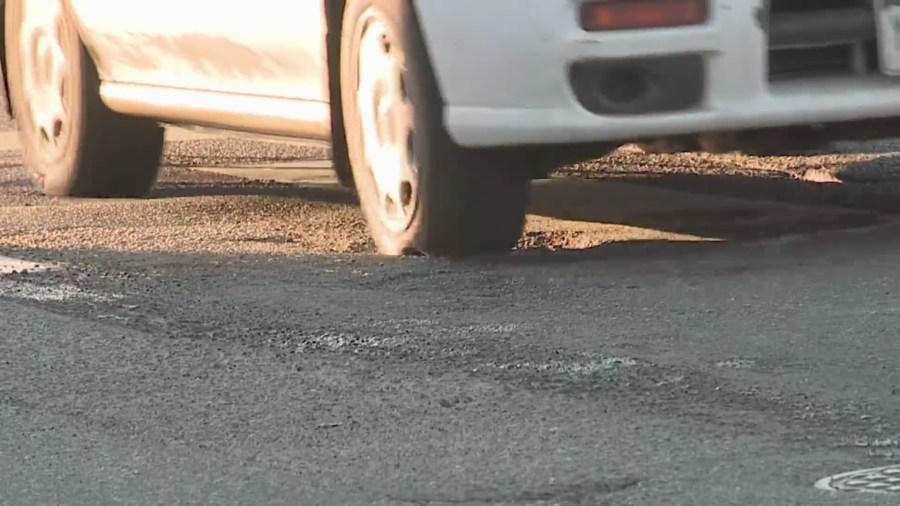

DENVER (KDVR) — While you may be celebrating the abrupt end to the extended cold snap, the roads you drive on every day may be silently suffering.
The Denver metro went from 19 degrees below zero early on Tuesday to 38 degrees above it in the afternoon.
This extreme fluctuation just might cause the pavement you rely on to get everywhere to crack under pressure — literally.
The Colorado Department of Transportation said the freeze-thaw cycle, or when temperatures continuously fluctuate between warm and cold, creates potholes.
When water freezes, it expands and fills more space under the pavement, which causes cracks and bends and weakens the road surface. Then, when the ice melts, the pavement contracts and leaves gaps or voids under the surface.
The more the freeze-thaw cycle happens, the more cracks start to form. Eventually, the weight of the vehicles continuously passing over the cracked pavement causes a break, otherwise known as a pothole.
Additionally, the more moisture that comes alongside that freeze-thaw cycle, the more likely it is that potholes form.
During the winter season, CDOT crews typically only make temporary repairs to potholes because the materials for permanent repairs require consistently warm temperatures.
How to report a pothole
There are several CDOT hotlines that people can call to report a pothole:
Metropolitan Denver (Region 1): 303-759-2368
Southeastern Colorado (Region 2): 719-562-5568
Northwestern Colorado (Region 3): 970-243-2368
Northeastern Colorado (Region 4): 970-350-2368
Southwestern Colorado (Region 5): 970-385-1423
However, when it comes to non-state roadways, it is up to the city to repair them.
The Denver Department of Transportation and Infrastructure has an online portal where people can report potholes and other issues.
People can also call 311 to report potholes in Denver’s city limits.