
COLORADO SPRINGS, Colo. – Nearly three months after the United States Military and Coalition forces left Afghanistan in a pre-ordained exit, American citizens and people who helped our military during the 20 years of war remain trapped in the country, as their families overseas fear their lives are at risk in a country controlled by a group with historical ties to terrorism and insurgency.
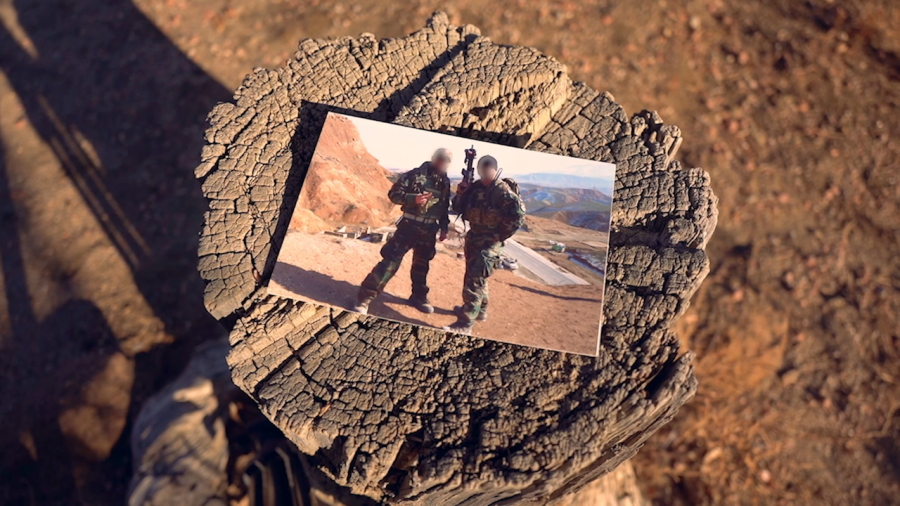
Sam, whose last name FOX21 is concealing to protect his family’s safety, has lived in the United States for eight years now. He gained his citizenship through the Special Immigrant Visa program after serving as an interpreter for the U.S. military.
“The amount of support you got from [Service Members], it’s amazing. It’s like they protect you, they teach you,” Sam said, “I have been taught a lot of stuff by them, because I was right there with them for every single fight.”
Sam began as an interpreter when he was younger than 18. He remembers picking up English off the TV show “Pimp my Ride”.
“I didn’t know the meaning of it, and until I met a U.S soldier and asked them, they burst out laughing,” Sam said.
Sam’s motivation to become an interpreter came from living under the Taliban rule from the late 1990s into the early 2000s.
“I know [the] Taliban government. I was a kid, I still remember stuff they did. I still remember the beating, beating my relatives, my dad, my neighbors. It was just such a horrible experience,” he said.
The town he grew up in, located in a northern province of the country, was near a Taliban stronghold at the time, Sam recalled.
He said he remembers it was a warm night when America’s longest war began, because whenever it was warm at night, his family would sleep outside.
“I remember my father waking me up, and I see, like, the sky is red. It’s like bullets are flying everywhere. I was a little kid, and that was the regime change,” Sam recalled. “I know, in a way, that it was excitement for us. Like hey, you know, these guys are being kicked out right now. You know, they’re being killed by the good guys.”
Sam remembers his father telling him they would be able to live free. He would be able to go to school and so would his sisters.
When Sam and his wife left the country in 2013 under the SIV program, it meant leaving his mother and sisters behind, as well as much of his wife’s family, who included her father, a colonel in the former Afghanistan guard.
For years, Sam felt that his family back in his home country would one day live freely and safely. That hope disappeared this summer, along with America’s presence in the country.
When the unforgettable images of Afghani’s clinging to an American military plane in hopes to leave the country began to appear, the rush began for Sam to get his remaining family out of the country.
First, it was his brother-in-law and his family that included their toddler-aged daughter. They had the documentation needed to get on the plane, their names were on the manifest, but breaking through the chaos and crowds to get inside the international airport in Kabul tested their will. On the first day of trying, the family was teargassed.
“My brother-in-law, he was scared and said, ‘this isn’t worth it, I don’t want to lose my kid over this,’ and I kept telling him, ‘Hey, look. I understand this, but we need to get you in,'” he said.
Sam’s family crawled through muddy ditches surrounding the airport’s Abbey Gate to try to get in. They were able to grab the attention of a U.S service member to prove they actually had a spot on the plane.
Sam estimates he and his wife waited and were on the phone for around 50 hours with his family. Once they were in, then began several hours of waiting, but his brother-in-law and the rest of his family were able to get on board.
One day later, a bombing at the Abbey gate killed 192 people, including 12 U.S Marines and one Navy Corpsman.
“It’s one of the worst nightmares anyone can see, and that is the desperation of people trying to not get killed,” Sam said.
Sam said that he knows his service as an interpreter puts a target from the Taliban on his mother and sisters. He’s been working with a group AfgFree.org that confirms his fears with pictures that show and witnesses that describe the Taliban hunting down U.S. and Coalition allies. In some cases, the Taliban kills them.
“We’ve seen young men thrown in the trunk of a car, and it takes off. We’ve seen, from our partners, videos of the Taliban searching house to house in neighborhoods looking for people that worked with us. So, that’s our sense of urgency,” said Retired Lieutenant Perry Blackburn.
Blackburn founded Afgfree.org in August after getting a slew of calls from people hoping to leave the country. Blackburn will only seek to help and rescue people who are vetted with documentation from the U.S. Department of State.
Blackburn says that documentation allows safe passage, ensures resettlement and means that no one the group helps would end up in a refugee camp, a situation he describes as the potential to be indefinite.
“We’re not trying to make their life worse, we’re trying to help them make it better and further them to another area of the world to resettle in,” Blackburn said, adding that for many, their final destination is not the United States.
While a non-profit, Blackburn says that no one in the organization is paid for the work they do. The money from donations goes to helping people get by during the harsh Afghan winters, helps buy charter plane tickets, helps people hide, or helps people flee to another country.
The latter situation is one in which Sam’s father-in-law found himself. Sam’s father-in-law was a colonel in the old Afghan guard and, in his last nights in Afghanistan, never stayed a night in the same house as he felt he was being tracked by the Taliban.
Sam’s father died in 2019 from a heart attack and since then, he has grown closer to his wife’s father.
“We were just losing our minds. Like, what if we lose him? Our entire family will be killed, when?” Sam said. “He has personally captured a lot of Taliban commanders who, by the way, right now, are in charge.”
Through various means, Sam’s father-in-law was able to escape the country and make it to the United Arab Emirates.
“It’s not an uncommon case. What’s uncommon about it is how they pursue it, and what they were willing to risk to get out of Afghanistan, and the strength it took for him and his family to be able to do that,” Blackburn said, whose organization helped facilitate the escape.
Still, however, Sam’s mother and sisters remain. When Sam was growing up, he remembers his mom telling him of the times in Afghanistan when she wore jeans and went to the movies. Decades ago, the descriptions are seemingly of a different world.
The Afghanistan of the last several decades restricted the freedom of women under Taliban rule, and living conditions in the country have deteriorated under almost constant wartime.
“I just want them to live. Literally, at this point, I just want them out of that country, because I know that because of my service, they will eventually be captured, and they will eventually be killed. And I know that for sure,” Sam said.
Sam’s worry is compounded by a state department he sees as entirely ineffective at making progress on Visa, SIV or other applications from Afghans hoping to leave the country.
For months, he has filled out applications to try and get his mother and sister a status that allows Afgfree.org to get them out of the country and out of harm’s way.
“I am losing hope every day,” Sam said. “I have filled out dozens of these links of these forms online, and all you get after is like a copy-paste of what is on the State Department website. I can go there myself. I can see it myself. You don’t have to send it to me.”
Sam’s situation is one of hundreds, potentially thousands, of families face in dealing with the state department.
“It’s just unfortunate. The state department is dealing with paperwork and processes, and we’re dealing with humans, and we’re also dealing with time,” Blackburn said.
“It’s grim,” Blackburn said of Sam’s family’s situation. “It’s long-enduring, and Sam knows this.”
In response to FOX21, a state department spokesperson acknowledged that the “suspension” of services at the embassy in Kabul has made it impossible to conduct in-person aspects of the visa process, such as interviews with applicants.
The state department said it will continue to expedite the processes that can be completed remotely.
“We continue our diplomatic efforts to ensure safe passage for U.S. citizens and for any Afghan partners or other foreign nationals who still want to leave Afghanistan. While we are currently unable to provide consular services for immigrant visa applicants, including Special Immigrant Visas (SIVs), in Afghanistan,” the department said in a statement.
The full statement can be read at the conclusion of this article.
The department says that it is working with advocacy groups and non-profits to work on getting people who want out of Afghanistan to safety.
Blackburn wishes for more cooperation; however, akin to a public-private partnership, as his organization has worked to fill the gaps the U.S. Government has left.
“As Americans, it says a lot for who we are as a people and our humanity when the people that our government turned their back on are still hopeful that we will help them. They have hope because of us,” he said.
Below is the full response from the U.S. Department of State:
“We are working to facilitate the departure of Afghans to whom we hold special commitments because of their affiliation with the U.S. government, specifically our locally engaged staff and holders of passports with physical SIVs. As we’ve said before, we will be relentless in this effort as we stand by our Afghan allies.
“We continue our diplomatic efforts to ensure safe passage for U.S. citizens and for any Afghan partners or other foreign nationals who still want to leave Afghanistan. While we are currently unable to provide consular services for immigrant visa applicants, including Special Immigrant Visas (SIVs), in Afghanistan, we will continue to process SIV applications at every stage of the SIV process, including by transferring cases to other U.S. Embassies and Consulates around the world where applicants are able to appear. We recognize that it is currently extremely difficult for Afghans to obtain a visa to a third country or find a way to enter a third country. We are developing processing alternatives so that we can continue to deliver these important consular services for the people of Afghanistan. Developing such processing alternatives will take time and will depend on cooperation from third countries, as well as the Taliban.
Following the suspension of operations at Embassy Kabul, we do not have a consular presence in Afghanistan so we are unable to carry out the statutorily mandated steps and security procedures in the visa application process that require the in-person presence of an applicant before a consular officer inside Afghanistan.
“However, we continue, as much as possible, to expedite processing of SIV applications at all other stages of the process that can be performed remotely, such as assessing applicants for COM approval and DHS’s adjudication of the petition for special immigrant status. In addition, Afghan SIV applicants who are able to travel outside of Afghanistan and have reached the visa interview stage can transfer their SIV applications to other immigrant visa processing posts outside Afghanistan.
We are committed to working with Congress and our interagency partners on ways to further streamline the SIV program beyond that which we have achieved over the last nine months.
This effort is of utmost importance to the U.S. government.
“The State Department has established a team to coordinate across government agencies and with advocacy groups, nonprofits, and others. The team is working closely with DoD, DHS, and other partners to facilitate the departure of those who wish to leave Afghanistan, including U.S. citizens, LPRs, and Afghans to whom we have a special commitment because of their employment with the U.S. government.
“Earlier this month, Ambassador Elizabeth Jones was named Coordinator for Afghan Relocation Efforts, assuming oversight of the entire Afghanistan relocation effort, from our ongoing efforts to facilitate the departure of individuals from Afghanistan to their onward relocation and resettlement in the United States. Ambassador Jones and Department staff are focused on the very complex issues related to our efforts to facilitate the relocation and resettlement in the United States of Afghan individuals to whom we have a commitment.”