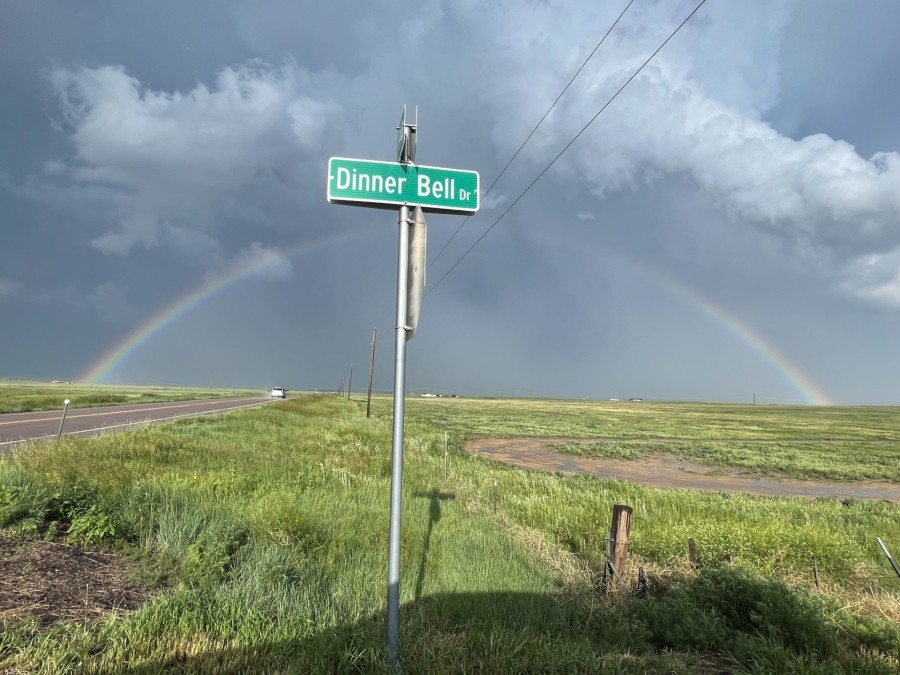

(SOUTHERN COLORADO) — Southern Colorado has already seen plenty of moisture this year with several different precipitation records being broken just this past June. We have seen quite the stretch of rain-filled days but now our attention starts to turn to the beginning of monsoon season in Colorado.
But where is it?
Typically, our season starts off in early July, so there’s no real cause for concern just yet. However, weather models appear to be keeping our overall forecast less favorable for a more persistent monsoon pattern to develop. In short – it appears to be delayed just a bit.
Our monsoon season, more formally known as the “North American Monsoon,” is essentially just a seasonal shift in our winds. We also see an increase in moisture which, in turn, can increase our chances for a few showers and storms with the right ingredients in place.
A lot of the monsoon pattern, though, depends heavily upon some of the larger scale features. This includes the setup of a dominating high-pressure system – but it has to be in the right spot.
Currently, we are starting to see early signs of a fairly persistent high-pressure system setting up, but it is located in the wrong spot (see below). The high is just too far to the west, and consequently, it ends up being counterproductive to monsoon moisture flow.
The clockwise spin of the high-pressure system is at odds with the usual flow of moisture from the Gulf of Mexico.
Current set up – less favorable
What needs to happen for a more favorable set up can be seen below (hypothetical). The high-pressure system needs to drift to the East and park itself more so over central Texas. At the same time, an accompanying low-pressure system should develop in the Arizona region.
The combined flows of the two systems, (high spinning clockwise, low spinning counterclockwise), leads to enhanced moisture return into Southern Colorado.
Hypothetical set up – more favorable
On top of all of that, we also have a bit of a wild card factor this year: El Nino.
Without diving into too many details, the arrival/transition into El Nino may actually tamper with how significant our monsoon season is this year. Experts are predicting slightly less moisture as our jet stream could fluctuate more in response to the oscillation.