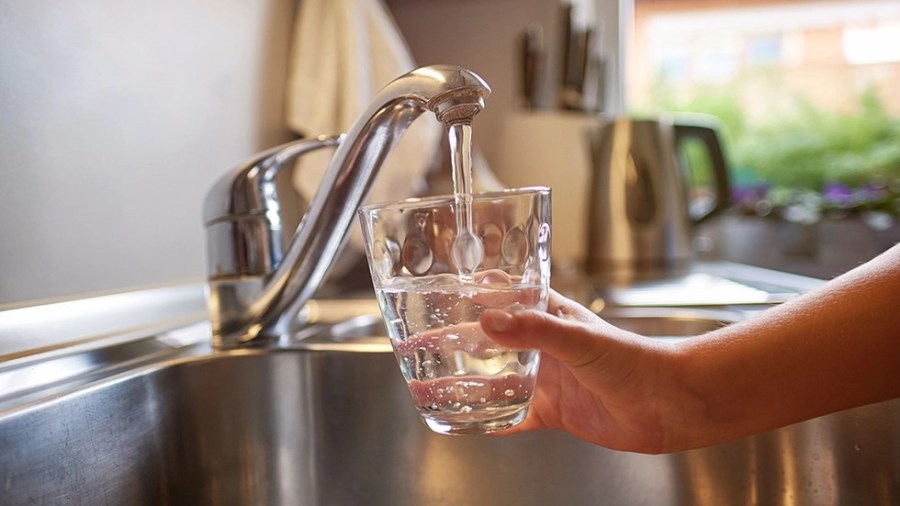

(PUEBLO COUNTY) — The Pueblo Department of Public Health and Environment (PDPHE) tested various groundwater and surface water within Pueblo County for per-and polyfluoroakyl substances (PFAS), a chemical associated with health risks.
On Thursday, Aug. 1, PDPHE revealed a study that sampled 20 bodies of water and various private water wells throughout Pueblo County in the Fall of Aug. 2023 before snowfall and again during the Spring/Summer of 2024 during runoff season, with some of them coming back showing high-levels of PFAS.
What is PFAS?
Originating in the 1940s, PFAS is a man-made chemical that was introduced as a highly durable, non-stick, heat-resistant resin known as Teflon, then later in the 50s as a new type of rubber for aircraft fuel lines.
The Environmental Protection Agency (EPA) became aware of the dangers of PFAS in the late 90s when the EPA detected it in 98% of blood serum samples in the U.S. population. Since then, it has extensively been used in industry and consumer products until the EPA phased it out of production in 2015 due to health risks.
The EPA established health advisory levels (HAL) in drinking water for PFAS compounds including PFOS and PFOA. The EPA said the health advisory overall combined HAL was 70 parts per trillion(ppt) — 0.02 parts ppt for PFOS and 0.004 for PFOA — equivalent to one drop of water in 20 Olympic-sized swimming pools.
Can PFAS cause illness?
Communities exposed to PFAS contamination whether through water or other sources face an elevated risk of health impacts. The effects of PFAS are still being investigated, but there are thousands of PFAS chemical compounds found in many consumer, commercial, and industrial products.
However, research has found that PFAS exposure has been linked to thyroid disease, pregnancy-induced hypertension, and testicular and kidney cancer. Contamination can also cause hormonal issues, suppress the immune system, have a negative impact on reproductive systems, and can be associated with high cholesterol.
The risk of illness is pronounced for children under 5 years old, pregnant individuals, those planning to become pregnant, and breastfeeding mothers.
What did Pueblo County water results show?
PDPHE sampled 20 bodies of water throughout Pueblo County. Those that were found to have nondetected samples of PFAS in 2024 included: Nature & Wildfire Discovery Center-Arkansas River Downstream, Swallows Cemetery Arkansas River Upstream, Bessemer Ditch, Lake Isabel, and Salt Creek. Some water bodies in the Pueblo Reservoir also detected zero samples after the runoff season: Anticline Pond, Down Stream Dam, Up Stream Dam, North Shore Marina, and South Shore Marina. All listed above had a ppt lower than 1.0 in 2023, besides the Anticline Pond in Pueblo Reservoir which had a 6.0 ppt.
The Swim Beach in Pueblo showed a sample of 2.58 ppt in 2023, although the second sample taken in 2024 was calculated at 0.94 ppt. Lake Beckwith followed close with a sample of 1.11 ppt in 2023, and a second one of 0.7 in 2024.
Valco Ponds and the St. Charles River at Pueblo Airport reported samples of 6.80 ppt and 5.06 ppt in 2023, during the run-off season they reported declining amounts in samples that showed 6.57 ppt and 1.27 ppt. Avondale Sewage showed a 17.9 ppt although it was cut to 7 ppt in the sampling taken in 2024. Wildhorse Creek marked an 11.16 ppt in 2024, a decrease from 13.98 ppt in 2023.
Fountain Creek at Confluence and Highway 47 showed similar results of 66.1 and 5.4, those were cut to almost half in 2024 to 38.09 and 38.13.
Lake Minnequa and Runyon Lake were the only two bodies of water that showed an increase in the runoff season. Runyon Lake showed a 3.48 ppt in 2023 and 17.84 in 2024, while Lake Minnequa sampled a 13.7 ppt, and a second sample was calculated at 29.30 ppt.
PDPHE also sampled multiple wells in nine zip codes. Zip codes 81003, 81023, 81022, 81004, and 81069 were found to have no samples of all five PFAS drinking water compounds. However, it is important to know small average traces of PFAS chemicals were detected in all samples taken in all zip codes but 81003 and 81023.
Zip code 81005 contained a 3.43 ppt of PFAS for all five drinking water compounds. While zip code 81025 had a 0.515 ppt.
Zip code 81006 detected an average PFAS level of 64.12 ppt. while zip code 81008, which includes areas of Ridge, Wigman, and Overton Road detected an alarming amount of 145.24 ppt, and 100% of five private samples taken tested positive for PFAS.
What should I do if a high amount of PFAS is detected or if I want to prevent exposure?
The PDPPHE recommends having your well tested for PFAS contamination.
If a sample is shown to be less than 23 ppt, the EPA recommends no immediate action as it is under EPA’s HAL. Sums of 23-46 ppt should investigate filter systems that may help remove any PFAS from drinking and irrigation water.
Any samples found to have a sum of 46-70 ppt or above are recommended to take immediate action and obtain a filtration system.
PFAS contamination can be prevented by using an at-home water filter or using an alternate source of water for drinking and cooking. Reverse osmosis or granulated activated carbon can be effective at removing PFAS and other contaminants that may be in the water, some examples of specific brands include; Purefast Pitcher Filter Cartridge, Hydroiv Underskin Filter, and more. More information on appropriate filtration systems can be found on CDPHE.
Any additional questions or further actions about these test results can be directed at (719) 583-4397 ext. 8.