
(SOUTHERN COLORADO) — All eyes will be up in the sky once again as we eagerly await our next total lunar eclipse. The good news is that just about everyone in the United States will be able to see it this time around. The bad news is that there’s always a chance we may have to battle some rough weather here locally.
The timing for the lunar eclipse is late on Thursday, March 13, and it will last through the very early morning hours on March 14. Specifically, the event will start just after 11 p.m. and wrap up a touch before 3 a.m. the following day. Totality will occur at 12:58 a.m. on March 14.
The total lunar eclipse itself happens when the moon enters the Earth’s shadow. The Earth’s shadow comes about from a specific angle and lining of the Sun with our moon. The partial portions of the total lunar eclipse will happen on either side of the Earth, just before (and after) the moon enters the Earth’s shadow fully.
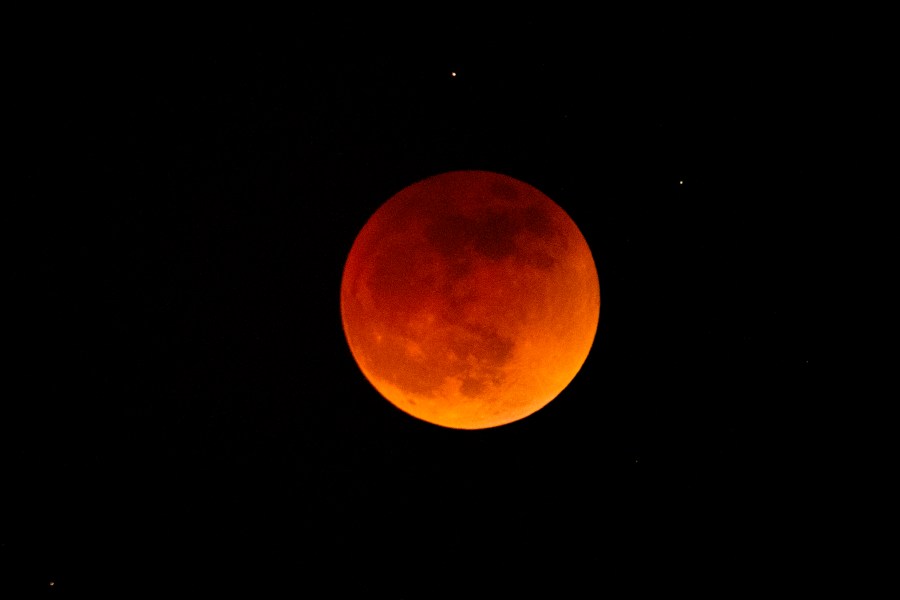
The red-ish glow from the lunar eclipse happens when light gets scattered at different intervals. During the total lunar eclipse, the edge of our sunlight will scrape the thick layer of atmosphere just above the surface of the Earth.
Shorter wavelengths from the sun will get scattered first – this includes blues, violets, and purples. Longer wavelengths from the sun will get scattered last – oranges and reds. Thus, by the time the sunlight hits the moon, only the longer red wavelengths will reach it.
Total lunar eclipses do happen now and then, so if you miss this one, it’s not the end of the world. The next one visible in America is scheduled to happen on March 3, 2026.