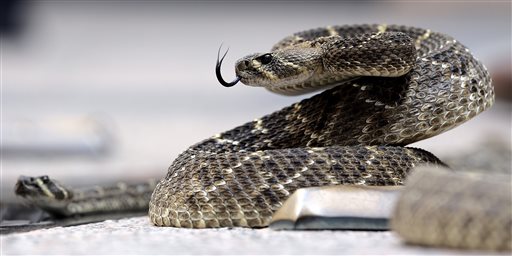

(CHAFFEE COUNTY, Colo.) — On Saturday, Sept. 7, the Salida Fire Department (SFD) warned hikers to watch for rattlesnakes after crews responded to a snake bite victim.
SFD reported numerous rattlesnake sightings in the area. The photo below shows a rattlesnake spotted during a call on Tenderfoot Mountain.
According to Colorado Parks and Wildlife (CPW), rattlesnakes avoid biting unless threatened or provoked. Though rare, bites are painful and serious, especially for children and pets.
Understanding rattlesnake behavior helps avoid encounters. They return to the same spots to sun, hunt, and den each year. Slow-moving, they often stand their ground and rely on camouflage. If a rattlesnake coils or rattles, back away slowly to convince the snake you are not a threat.
Rattlesnakes den in winter and are active by spring and they typically hunt in the late afternoon or evening. They can be seen more often in the autumn as temperatures cool, requiring them to bask in the sun on warm surfaces, such as pavement or rocks near trails or roads.
CPW said the best way to avoid wildlife encounters is through awareness and avoidance. Stay alert, using your eyes and ears, and steer clear of any wildlife you spot or hear.
Look for snakes basking in sunny areas like trails or roads and feel free to walk off-trail to avoid them. Always check where you place your hands and feet, especially near rocks or logs. Avoid using headphones so you can hear a rattlesnake’s warning.
Wear sturdy boots to protect your feet and ankles. Use extra caution at dusk when visibility drops, and always wear boots, even in camp. Travel in groups for better awareness and help in case of a bite.
If you can’t avoid a snake, follow these precautions:
Freeze in place. Snakes are often heard before being seen. If you hear a rattlesnake, stop until you locate it. Moving without seeing the snake could bring you closer. Even if it’s visible, staying still reduces your threat and helps assess the situation.
Keep at least five feet of space between you and the snake, as they can strike from a distance. Move back slowly if possible.
Never attempt to catch, kill, or provoke the snake. One-third of bites happen when people try to handle or kill them. Safely move around it.
If a snake is in your home or garage, contact local wildlife officials or a pest control company.
To keep pets safe from rattlesnakes, always use a six-foot leash, as required on most public lands in Colorado. Dogs, in particular, may ignore a snake’s warnings.
If you live in rattlesnake-prone areas, remove rock piles or tall grass that could attract snakes or prey, and inspect the area before letting pets outside. Many Colorado dog training facilities offer snake avoidance training to help pets recognize and avoid snakes.
Due to their size, pets are more vulnerable to rattlesnake bites. If bitten, seek immediate veterinary care and call ahead. Do not attempt to kill or catch the snake for identification.
If bitten by a rattlesnake, the Colorado Poison Center advises:
Call 1-800-222-1222 for instructions, then go to the nearest hospital.
Remove jewelry and tight clothing.
Stay calm and limit movement.
Do not cut the bite or try to extract venom.
Do not use ice, heat, or a tourniquet.
Do not attempt to capture or kill the snake.