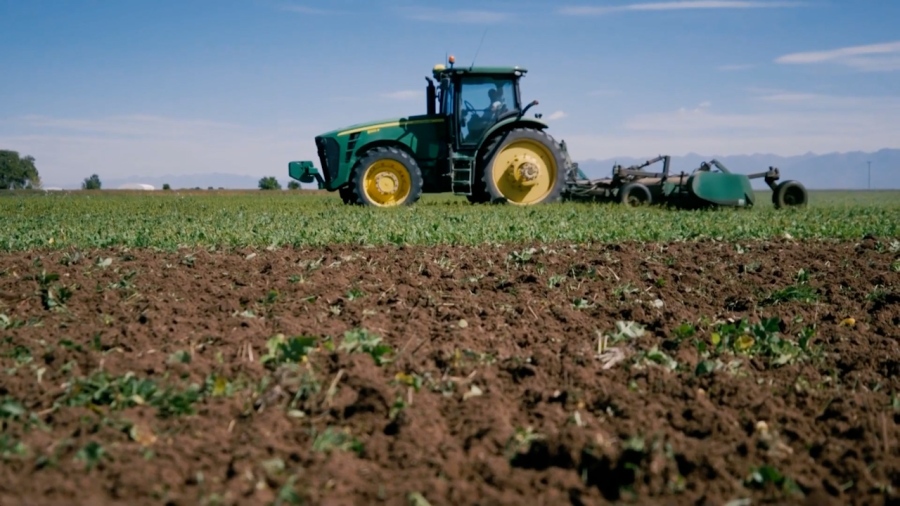

(SAN LUIS VALLEY, Colo.) – The San Luis Valley, at 7,500 feet in elevation, is the largest alpine valley in the world. The Valley is made up of six unique counties, and since it became part of the territory of Colorado in 1861, the small-town feel remains a staple.
The San Luis Valley Museum located in Alamosa has educational displays featuring artifacts, photographs, antiques, and collectibles portraying early ranch and farm life. A lot of the collections found in the museum were donated by those who call the San Luis Valley home.
“If you lived yesterday, you lived in history and that’s why it’s relevant and really important,” said Jeff Myers, the San Luis Valley Museum Director.
The Valley receives less than seven inches of precipitation annually, making it a high desert. It is surrounded by the 14,000-foot peaks of the Sangre de Cristo and the San Juan Mountains. Mount Blanca is the fourth-highest peak in Colorado at 14,345 feet. The San Luis Valley is also home to the largest dunes in North America.
Native Americans occupied the valley for at least 11,000 years before European contact. Historically, it was the home of the Ute Tribe. The Jicarilla Apache, Pueblo, Navajo, Comanche, and other tribes used the valley for hunting, and cool summer camps, and traveled through the mountain passes for millennia. Mount Blanca is one of the Navajo Nation’s four sacred mountains.
“The entire San Luis Valley and the mountains around us, all the geology of the area, the history of the area, not just culturally, but it goes back eons of time,” Myers explained. “You’re in one of the oldest parts of Colorado.”
The San Luis Valley was once a northern frontier of the Spanish Empire. The region was first explored by the Spaniard, Juan de Zaldivar, in 1596.
The San Luis Valley Museum also has an original copy of Zebulon Pike’s Journal, published in 1810, on display. In the winter of 1807, Captain Pike and a small contingent of men were exploring the newly acquired Louisiana Purchase. They built a small stockade on the Conejos River, in what was then Spanish territory. There, Pike and his party were arrested and taken to Monterey, Mexico before being returned to Louisiana.
Hispanic settlers from New Mexico founded settlements during the late 1840’s and 1850’s in the southern part of the Valley. San Luis, founded in 1851, is the oldest city in Colorado. After the United States acquired the area from Mexico in the Treaty of Guadalupe Hidalgo, Fort Massachusetts was established in 1852. It was the first U.S. military fort in Colorado. It was replaced by Fort Garland in 1858, where Kit Carson was the Commandant for two years.
Gold and silver discoveries in the San Juan Mountains required railroads to accommodate the influx of people and for transporting. Alamosa was founded in 1878 after the railroad was completed.
“The railroad is just straight like a gun barrel,” Myers said. “That’s how these little towns in the Valley cropped up, because they would be right along the train route.”
Irrigation canals were first built by Hispanic settlers from New Mexico. Large canals like the Empire Canal began being built in the 1880’s. This attracted Mormon, Dutch, German, and other settlers to the area. Japanese farmers from California came to the Valley in the 1920s.
Exhibits at the San Luis Valley Museum include a school room with books from the 1870s, a general store and post office, a farm and ranch display, historic photographs, military uniforms, and Native American artifacts. The museum also has stunning collections of jade, porcelain, ivory, toys, and natural history that were donated by area residents.
Located at 4th and Hunt in Alamosa, the San Luis Valley Museum charges $8 at the door. Students, teachers, and veterans all get into the museum for free. Once you experience everything the museum has to offer inside, be sure to check out the entire history of the Valley on the outside of the museum – an Adams State graduate painted and plastered art to the side of the building, where it has since become an integral part of the museum itself.