
DENVER (KDVR) — Researchers at the Denver Museum of Nature and Science discovered a new mammal species from 65 million years ago.
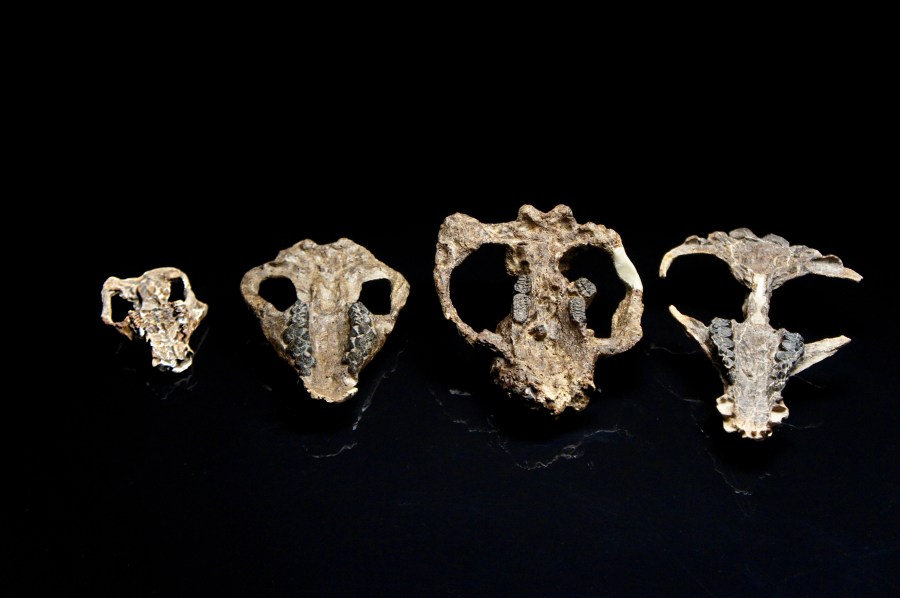
A fossil of a skull and jaws of the newly discovered species were uncovered near Corral Bluffs on the edge of Colorado Springs, according to the museum. The rocks that the fossil was found in date back to a few thousand years after the extinction of the dinosaurs.
“Rocks from this interval of time have a notoriously poor fossil record and the discovery and description of a fossil mammal skull is an important step forward in documenting the earliest diversification of mammals after Earth’s last mass extinction,” said Dr. Tyler Lyson, Museum Curator of Vertebrate Paleontology in a release.
The discovery was several years in the making. Dr. Tyler Lyson joined the museum in 2014 as the Curator of Vertebrate Paleontology. He wanted to answer questions about what happened during the first million years after the mass extinction of dinosaurs.
Lyson and his team looked into the geology of locations like Bolivia and Argentina but decided they better check in Colorado first.
“And funnily enough, we ended up making the big discovery right here in Colorado, within the city limits of Colorado Springs,” Lyson said. “It’s crazy because you never think these big discoveries are going to happen in your own backyard.”
The museum said the site has a “unique preservation of diverse species” including plants and animals. In 2016, after months of digging and breaking apart large rocks, Lyson opened a rock to reveal a complete skull of a mammal that roamed the earth just after the dinosaurs went extinct, the Carsioptychus.
After that discovery the team continued finding more mammal skulls belonging to different species, ultimately leading to a grant for additional research from the National Science Foundation’s Frontier Research in Earth Sciences program, which is the largest grant the museum has ever received.
The 5-year project began last summer, and researchers published a study including the newly discovered species in April.
The new species was named Militocodon lydae in honor of two of the volunteers who helped with the research project, Sharon Milito and Lyda Hill.
The museum said the animal was roughly the size of a chinchilla and was part of a group of animals that brought up the rise of modern hoofed mammals like deer, cows and pigs.
A reconstruction of Militocodon lydae, a new genus and species of mammal uncovered from the Corral Bluffs fossil site. Militocodon lydae lived 65.5 million years ago, was about the size of a modern-day chinchilla or large rat, and likely had an omnivorous diet. (Denver Museum of Nature & Science)
Due to a poor fossil record at the time, scientists do not know much about how and when life rebounded after the mass extinction. Thanks to the discovery and ongoing research with the grant, the museum said scientists “are now able to paint a vivid picture of how and when life rebounded after Earth’s darkest hour.”
Lyson said the new species discovery provides important clues about how mammals diversified over time in the wake of Earth’s last mass extinction.