
(NATIONAL) — Cheddar is the second most popular cheese in America, after mozzarella, though some may say mozzarella is only riding the coattails of pizza. Just like when a band can lose its cool factor because it’s “too mainstream,” cheddar can often be overlooked by people wanting the more “authentic” cheese experience. But don’t count cheddar out just yet. It can hold some surprises for even the most dedicated cheese snob.
Keith Hintz, together with his brother and father, co-owns Springside Cheese Corp., which operates a historic cheese factory in Wisconsin, founded in 1908, as well as cheese shops in Wisconsin and Pueblo, Colorado. Springside Cheese makes over 40 varieties of cheddar, ranging in size, shape, and added flavors.
According to Hintz, “Cheddar cheese is one of the most versatile cheeses in functionality, making it one of the most popular cheeses. It can be sliced, shredded, and melted. It is great for sandwiches, soups, fondues, and even for pizza.”
The history of cheddar
Cheddar cheese was first made in the 12th century in Somerset, a county in southwestern England. The town, Cheddar and the nearby Cheddar Gorge are the namesakes of the famous cheese, where it was aged in the limestone caves that provided the perfect conditions for maturation.
Traditional English-style cheddar is made in round molds and wrapped in muslin cloth to protect it from harmful bacteria as it ages.
This style of cheddar tends to be much drier and crumblier than the blocks of cheddar Americans are used to, and often has a complex, earthy aftertaste. Some stores carry clothbound cheddars, and whether they are actually made in England or created with the same process elsewhere, it can be a fun way to expand one’s cheddar repertoire.
American cheddar
Over the years, cheddar-makers migrated to America, and as they did so, the process changed. And because cheddar didn’t receive the same name protection that cheeses like Asiago, Comté and Roquefort did, cheese-makers could still call a cheese “cheddar,” even if there were significant differences in the area of origin, type of milk, or production that went into creating it.
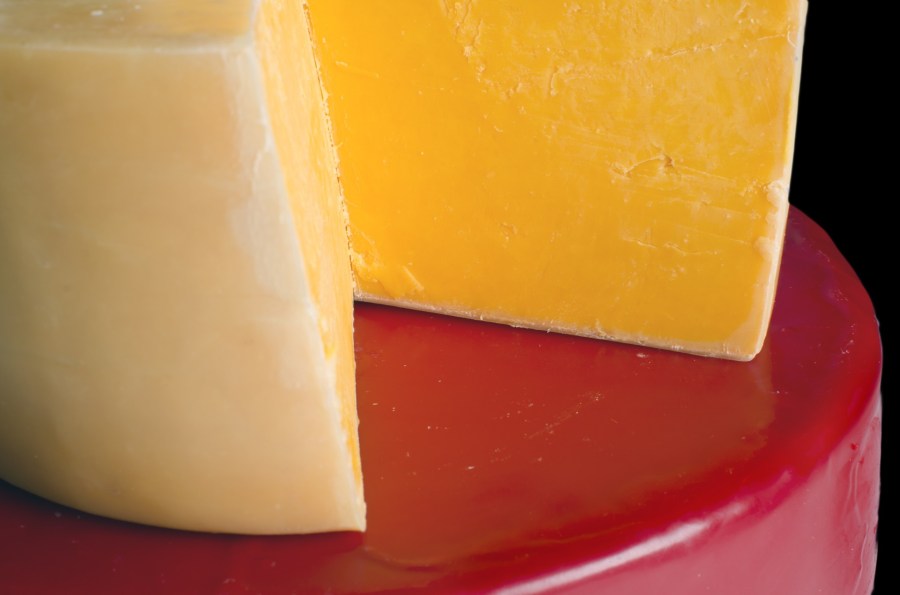
The biggest difference between the traditional clothbound cheddar and the more familiar cheddar is in the aging process. American cheddar is either vacuum-sealed in plastic or dipped in wax to protect it while it ages, instead of being wrapped in cloth.
This keeps it from losing moisture as fast, giving it a more fudgy texture, rather than crumbly. And while clothbound cheddars will develop natural molds on the outside of the cloth, creating complex, earthy flavors, the wax or plastic covering an American-style cheddar keeps out the influence of any outside molds, allowing for the more tangy, sharp flavors to shine.
With age comes complexity
“Cheddar cheese has a wide range of flavors, from the freshness of cheese curds to the sharpness of a 20-plus-year-old,” said Hintz. “It is both approachable for cheese novices at the early stages and can be complex and sophisticated at its later stages for the true cheese connoisseurs.”
The longer you age a cheese, the stronger and more complex the flavor you get. While a mild cheddar will mostly taste milky and a little salty, a well-aged cheddar can feature sharp, tangy, and even bacony or fruity notes to its flavor.
The freshest you can get a cheddar cheese is at the curd stage, before it’s been stacked for the aging process. Cheddar curds are mild and, if they are fresh enough, “squeak” when you chew them.
The freshest you can find in a cheddar cheese is at the curd stage, after the liquid in the milk has been separated from the solids, but before it’s been pressed and stacked for the aging process. Cheddar curds are mild and, if they are fresh enough, “squeak” when you chew them. Curds aren’t particularly complex in flavor, but they are just as addictive as potato chips.
Mild cheddar found in grocery stores is aged for the shortest amount of time, usually between two and three months. Medium cheddar is aged around five to six months, and the sharp cheddars found in the grocery aisles are aged anywhere from nine to fifteen months.
In stores that have specialty cheese selections, it’s possible to find premium cheddars aged as much as five, 10, or even 20 years. In 2012, cheesemakers found an unintentionally aged cheddar in the back of a cellar, aged for 40 years, that became what is possibly the oldest cheese ever sold to the public.
Go wild with added flavors
During the production process, cheesemakers can infuse cheddar with various flavors, adding extra notes to its flavor that take it to the next level, and taking the work out of pairing the flavors yourself.
Whether sweet or savory, cheddar has the flexibility to complement a wide variety of flavors.
“Cheddar cheese makes an excellent base for the combination of other flavors like bacon, chili peppers, cranberry, maple, smoke, and tomato basil,” said Hintz
So, for those of you whose dirty little secret has been that cheddar is your favorite cheese, it’s time to stand proud and wave your cheesy banners high. With its range and diversity, cheddar can stand toe-to-toe with any cheese challenger.