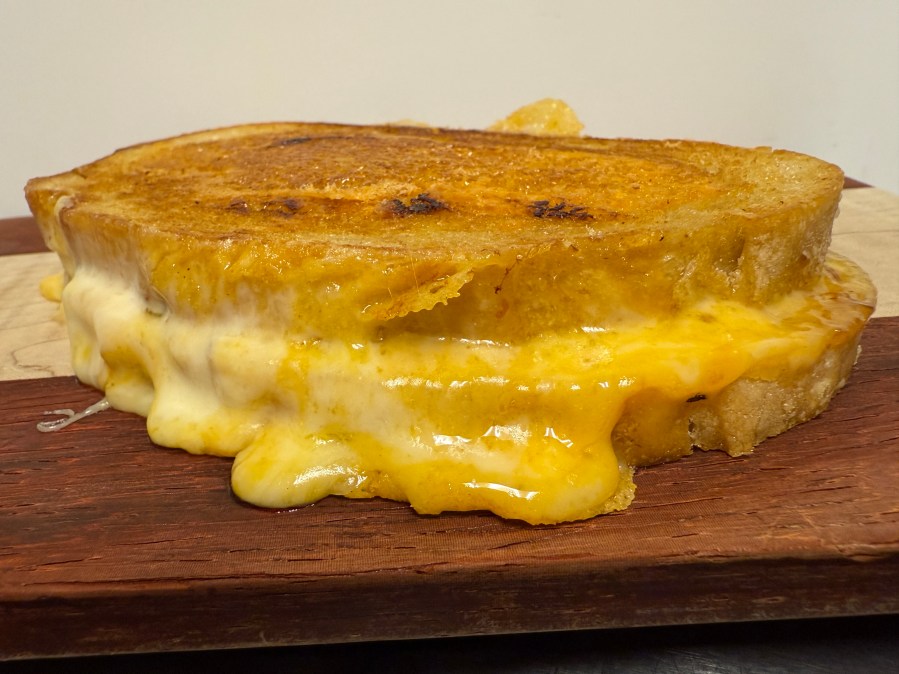

(NATIONAL) — Grilled cheese is one of those simple pleasures in life that, for many, has been a comfort food since childhood. Some people swear by the gooey-meltiness of American cheese, and others preach the stretchy goodness of cheddar.
In recent years, grilled cheese sandwiches have received a glow-up, featuring alternative cheeses and complementary additions, such as meats or fruits. But now that the options have been blown wide open, how does one decide on the best melters for their grilled cheese?
How to choose a good melter
Not all cheeses are created equal when it comes to melting. Some cheeses, such as feta or chèvre, merely soften when heated, while others, like Parmesan or aged Gouda, refuse to melt at all, merely becoming a sweaty block of hard cheese.
Cheese has a complex structure of proteins, fat, and moisture, and the structure can vary depending on the cheese. The science behind a good melter is complex and too much to go into here, but a simplification is that a good melter has enough water molecules to prevent the fat from clumping together and the right kind of structure to hold the fat in place while allowing it to soften.
A hard cheese like aged Gouda has lost too much moisture to melt well on its own, but a young Gouda is just right for a creamy meltiness. The structure of the proteins can also affect the stretchiness or silkiness of the melted cheese.
Whether you grew up with the silkiness of a grilled cheese made with American cheese or the stretchiness of cheddar, there are plenty of options to expand your grilled cheese horizons and try something new. Below is a list of the best silky vs. stretchy melters.
Silky melty goodness
American Cheese – Processed cheeses, such as American or Velveeta, are designed to be good melters by adding extra ingredients to existing cheese, such as milk fats or proteins. This keeps the cheese from clumping and makes it extra silky.
Young Gouda – A mild and buttery option, young Gouda is delicious paired with herbs like thyme or basil, or a thin layer of blackberry jam.
Fontina – A creamy and rich mild cheese with hints of nuttiness, it goes well with light fruits such as pears or salty prosciutto.
Brie – When brie melts, it’s gooey and molten and amazing with fig spread, rosemary, or mushrooms.
Taleggio – Taleggio is a smooth melter with a buttery and earthy taste that is great with Italian flavors, such as tomato, basil, salami, or balsamic vinegar.
Butterkase – A mild German-style cheese, it’s such a good melter that many choose it as a go-to alternative to processed cheese. It’s perfect paired with black forest ham and spicy mustard.
Wisconsin creamery, Springside Cheese, developed Krakow, a “semi-soft cheese modeled after the mildly sweet Polish Podlaski cheese.” It has similarities to Butterkase in its top-notch melting capabilities and is an excellent replacement for processed cheese.
Keith Hintz, co-owner of Springside Cheese creamery and the shop in Pueblo, Colorado, said their signature “Pueblo Pastrami” uses Krakow paired with pastrami and Pueblo Chile Cheese Spread.
Stretchy favorites
Cheddar – The classic stretchy-cheese choice. Cheddar melts best at the mild to sharp stage of aging, but older versions, such as one- or two-year-aged, can add a nice bite, especially when paired with a smooth melter. An example of pairing an aged cheddar with a good melter is the Springside Cheese One-Year-Aged Cheddar and Krakow combination in the image below.
Mozzarella – The stretchiest of all cheeses, it melts best when it’s the full-fat version. A fun play on the grilled cheese is to add pizza ingredients.
Monterey Jack/Pepper Jack – Monterey Jack is an excellent melter, and when you get the pepper-infused version, it adds a nice bite to the sandwich. Springside Cheese has a version made with Pueblo Chiles that is amazing with strawberry jam for sweetness or tomatoes for tanginess.
Gruyere – The classic fondue cheese, the meltiness is somewhere between smooth and stretchy. Options for pairing include ham or honey, and according to Hintz, it’s fun to add bacon jam to provide a sweet and salty component.
Giving grilled cheese a glow-up
In recent years, restaurant chefs and home cooks have not only been experimenting with alternative cheese options but also adding ingredients such as meat, fruit, or jam to add extra flavor. But throwing random ingredients into a grilled cheese won’t always make a better sandwich.
“It is important to consider how the bread, cheese, and other components will play together to achieve a harmonious bite,” said Hintz.
An easy way to decide which flavors to add to your sandwich is to select the cheeses and then think about what pairings you may have seen with that cheese in other circumstances.
Ever heard of apple cheddar pie? Adding slices of apple to your cheddar grilled cheese can bring tartness and a bit of crunch to your sandwich. Gruyere is often used in French onion soup, so onion jam can bring a similar sweet and savory flavor and depth as the caramelized onions in the soup.
And the hard cheeses that refuse to melt in block form can add bite when grated and added to a good melter.
According to Hintz, “A fun and tasty trick to create additional texture is to add grated Parmesan or an Extra Sharp Cheddar with the butter to the outside of the sandwich. It is like adding a Parmesan crisp.”
Whether stretchy or silky, dressed up or classic, the options for grilled cheese are endless and can make you fall in love with the flavors all over again.