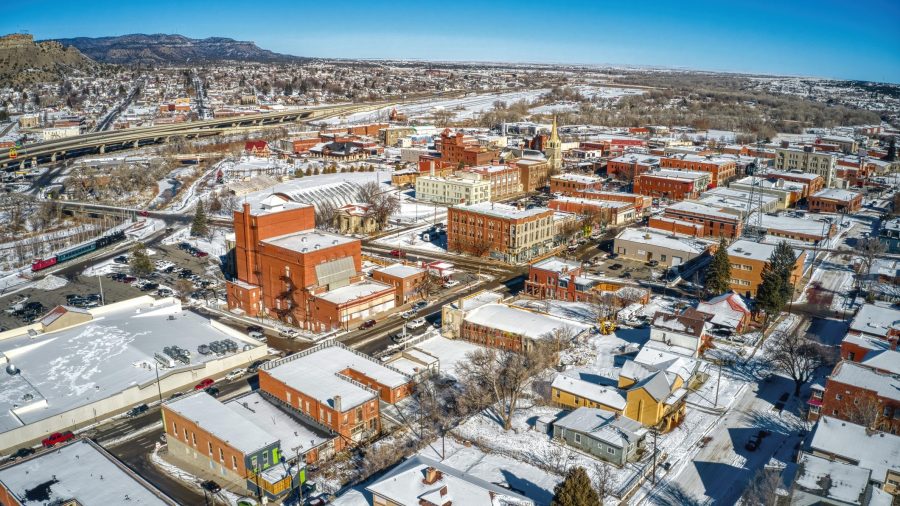

(TRINIDAD, Colo.) — Trinidad has had its share of identities over the years, but it’s always been a city that rolls out the welcome mat. Like many of Colorado’s southwest cities, Trinidad got its start as a stop on the Santa Fe Trail.
“The street right in front of us, Main Street, was the Santa Fe Trail, which ran from Saint Louis to Santa Fe, New Mexico,” said Tim Powell, Volunteer Docent at the Trinidad History Museum.
And it was one of those early travelers who saw the area’s potential.
“One of the people who used this trail was a man named Felipe Baca, who was traveling through here carrying four wagon loads of flour up to a small suburb of what is now Denver,” said Powell. “He camped along the Purgatory River and, realizing it was such good land for ranching and for farming, on his trip back, he got a plot of this land, planted it, and when the harvest came in, he took the crops back to Guadalupe, New Mexico.”
His bountiful harvest also planted hope, and he returned to Trinidad with about a dozen other families from New Mexico who became some of the first settlers here in 1862.
“His biggest challenge was keeping the Anglo infusion at bay, and so he fought very hard to keep the Hispanic culture alive here,” said Marggie Ferrendelli, Director of the Trinidad History Museum.
Farming and ranching became the first industries in Trinidad to take off, but they were not the last. “Then, of course, the coal mines came out and that brought one of our booms here,” said Powell. Then there was the introduction of the railroad and the need for hotels and hospitality. “This offered a place for respite,” said Powell. “This was a place they could resupply.”
In the late 1960s, Trinidad once again had a new reputation as the “Sex Change Capital of the World” thanks to Dr. Stanley Biber, a pioneer in sex reassignment surgery.
“Then it morphed into oil and gas, marijuana, and now we’re kind of focusing on tourism, recreation, and arts and culture,” said Ferrendelli. “We’re becoming very well known for arts and culture and outdoor rec.”
But with the booms come the busts, and the city has experienced its share of bumps in the road over the years. “But with the booms come the busts, and the city has experienced its share of bumps in the road over the years. “There were several times when the town itself was flooded due to the rivers overflowing,” said Powell.
“One of our towns, Sopris, actually flooded and became part of our dam now to prevent flooding here and in the town,” said Ferrendelli.
Sitting 21 miles north of Raton, New Mexico, and 195 miles south of Denver, Trinidad still benefits from its central location. “If you need a day trip, we’re three hours down from Denver, three hours up from Santa Fe,” said Ferrendelli. “So many great shops and restaurants and music.” “And friendly, welcoming people,” added Powell.
The city hopes to reclaim its stake as a travel destination, or at the very least, a good stop on your adventures. “There’s just so much history and so many stories that I would just encourage people to come down and visit Trinidad and explore for themselves.
Trinidad has evolved and reinvented itself over and over again.
“Since we’ve become a creative district, we’ve focused a ton on revitalization of our downtown,” said Ferrendelli.
One thing that hasn’t changed over the years, the city’s warm, welcoming nature.
“The Trinidad community is like no other,” said Ferrendelli. “And we’re quirky as heck. Trinidad is so odd and so loving, and I love it with all my heart.”