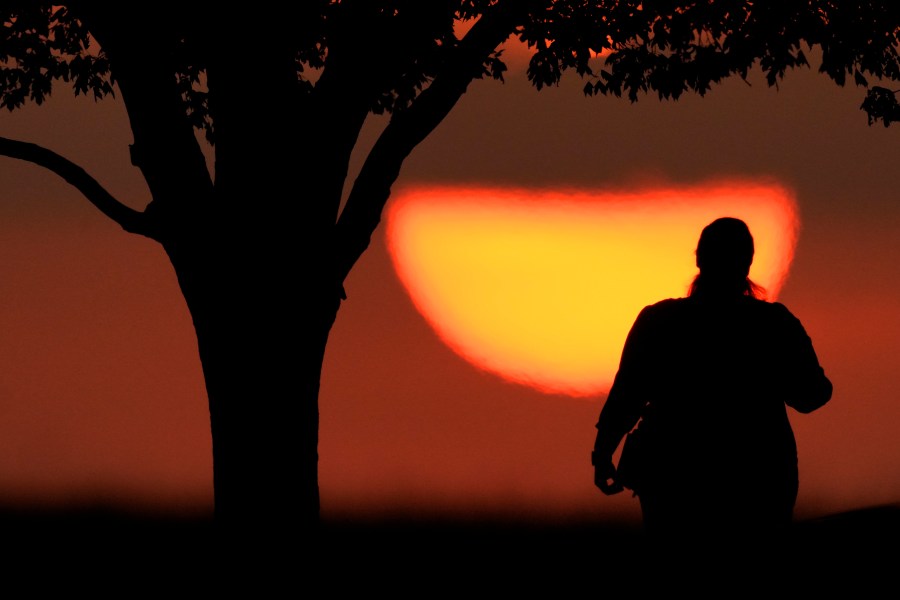

(SOUTHERN COLORADO) — Summer is officially here as of June 20 and it is one of the earliest arrivals on record. This summer has arrived a bit early due to the imperfect nature of our calendar and the fact that 2024 is a leap year.
The summer solstice welcomes the longest day of the year—during which Southern Colorado will get roughly 14 hours and 53 minutes of daylight.
During this time, the sun’s rays are positioned directly over the Tropic of Cancer—or the mid-latitudes. These direct rays of sunlight are largely responsible for our summer heat and the generous amount of daylight.
Our neighbors to the North, in the Arctic Circle, will get even more daylight during the solstice: an entire 24 hours. Due to the tilt of the Earth’s axis, the sun will not dip below the horizon. This is sometimes why the the Arctic Circle is known as the land of “Midnight Sun”.
For comparison, here’s a look at the Vernal Equinox or Spring. Notice how the sun’s rays strike the equator and deliver equal amounts of light across the Earth. Spring started back on March 19.
The amount of daylight maxes out on June 20 when the sun will set at 8:27 pm. The next three months will feature earlier and earlier sunsets. The changes in July won’t be as noticeable, but August will bring 7 p.m. sunsets and September will welcome the first 6 p.m. sunset of the year.
Along with the fluctuation in daylight, we will also see our temperatures change. Much of Southern Colorado is heading into the warmest part of the year. Temperatures in Colorado Springs will max out by the middle of July and then soon after slowly decline.