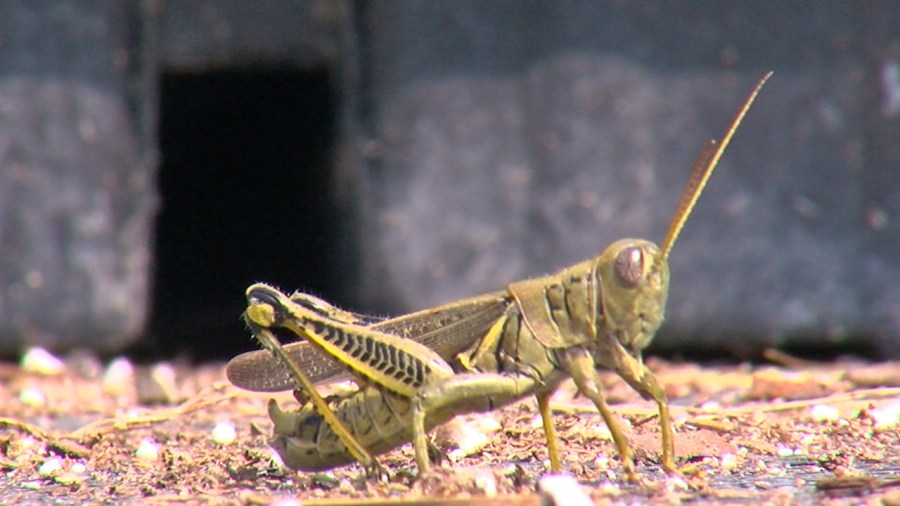

(COLORADO SPRINGS) — If you’ve been in Southern Colorado lately, you’ve likely noticed a peculiar phenomenon – an overwhelming presence of grasshoppers. They’re hopping around your feet, munching on plants, and, as some locals put it, staging a takeover. But what’s causing this influx of grasshoppers, and why is it happening now?
Experts have confirmed that there has indeed been an unprecedented surge in grasshopper populations across Colorado this year. According to scientists, the primary culprit behind this grasshopper galore is the changing climate.
Phelan Gardens in Colorado Springs, known for its lush greenery and diverse insect population, has been inundated by these critters.
“Well, I’m a native to Colorado Springs, so I’ve seen a lot of flux over the years. But we really did have a huge population this year,” said Maya Graham, the garden’s perennial manager.
Grasshoppers are not only abundant but also impossible to ignore. Their distinctive and loud clicking noises and charismatic flight patterns have drawn attention throughout the region.
The unusual weather patterns this year, characterized by a wet spring followed by an extended summer season stretching into September, have created the perfect conditions for grasshopper proliferation.
“The weather patterns that we had this spring with lots of rain provided a really nice environment for them to increase in numbers. The longer a growing season and the warmer the temperatures throughout the year, the more we’ll see grasshoppers,” said Colorado State University Associate Professor of Horticultural Entomology, Ada Szczepaniec.
The surplus of rainfall has led to a bountiful supply of vegetation, giving grasshoppers plenty of food to feast on.
“They have a really broad diet, but when their numbers are so big, sometimes they’ll just take a little bite out of anything that could be their food source,” said Szczepaniec.
As a result, gardens and crops have been feeling the brunt of this grasshopper invasion.
“We do see marginal damage on everything from trees to shrubs to perennials to edibles,” said Szczepaniec. “Everything is getting at least a little bit of damage.”
Unfortunately, traditional pesticides aren’t effective against such large grasshopper populations. Instead, experts recommend preparing for next year’s potential infestations. Graham says protective measures like row covers can physically shield crops, and diatomaceous earth, a silicate product, can be used in the spring to deter emerging grasshoppers.
The good news is that experts expect these grasshoppers to be gone within the next few weeks as the colder weather sets in. However, the surge in their numbers this year serves as a warning sign.
“What we’re seeing right now is basically the apex of their populations, and that’s giving us a clue that we’re likely to see more grasshoppers next year as well,” said Szczepaniec.
While relief is on the horizon for this year’s grasshopper invasion, it’s essential for residents to be prepared for the possibility of yet another grasshopper-packed summer in Southern Colorado next year.