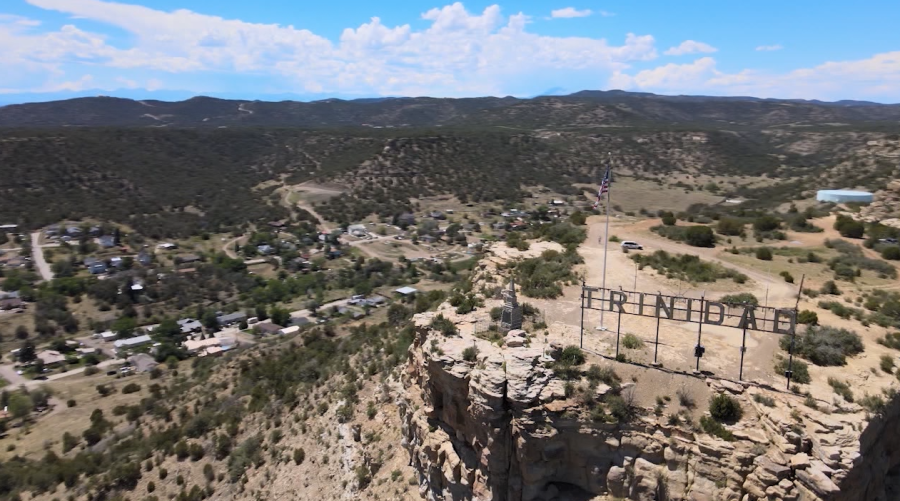

(LAS ANIMAS COUNTY, Colo.) — Earthquakes across Colorado, especially in the southern part of the state, are more common than you think, according to the United States Geological Survey (USGS).
In early June, two earthquakes were recorded in El Moro and Hoehne with magnitudes 3.8 and 4.3. Six other earthquakes were reported in March in the same area.
“It’s not unusual for Colorado to get earthquakes generally in the mountains…,” stated Enrique Chon, USGS Seismologist. “If you are comparing Trinidad or Raton Basin to the rest of eastern Colorado, then yes, absolutely. There aren’t many earthquakes that happen in the eastern half of the state.”
The Raton Basin is one of the most seismically active regions in the state, piquing the interest of seismological communities who have already been studying this phenomenon for quite some time, per USGS.
Experts say high earthquake activity could be contributed to natural tectonic motion causing preexisting faults to slip, but other researchers hypothesize it could be human induced– oil and gas activity from fracking may also be the cause.
“When you remove hydrocarbons from the earth, you pull up both oil as well as something called produced water… wastewater injection related to oil and gas production could be allowing those faults to slip,” stated Chon.
Wastewater, a byproduct of fracking, is disposed deeper into the earth’s crust while fracking happens at a more shallow level of sediment, according to Chon. Human-caused earthquakes happen at a deeper level in the Earth’s bedrock.
Chon said based on the depth of recent earthquakes in El Moro, there is a fair possibility they were connected to wastewater injection sites. Injection wells are also more common in this region compared to other parts of Colorado.
Most recorded earthquakes in Southern Colorado were less than magnitude five, which is not a cause for concern, stated Chon. The largest historical earthquake in Colorado occurred in November 1882, with a magnitude of 6.6, per USGS. There were no seismographs to record the event so the exact location is uncertain, but geoscientist generally conclude the quake was centered in the northern Front Range, northwest of Denver, USGS said.
“If earthquakes do begin to be larger and if it’s causing destruction, the oil and gas commission will start looking into it and start regulating the activity,” Chon said.
If this happens, the Colorado Oil and Gas Conservation Commission might use mitigation tactics such as stopping injection to add cement to the bottom of the wells or lowering the allowed injection volume for a period of time, per Chon.
Chon said it’s part of their job to work with oil and gas entities to help inform their decision when it comes to putting restrictions on operations. As of now, USGS said those living near Trinidad have no reason to be concerned about the earthquakes.