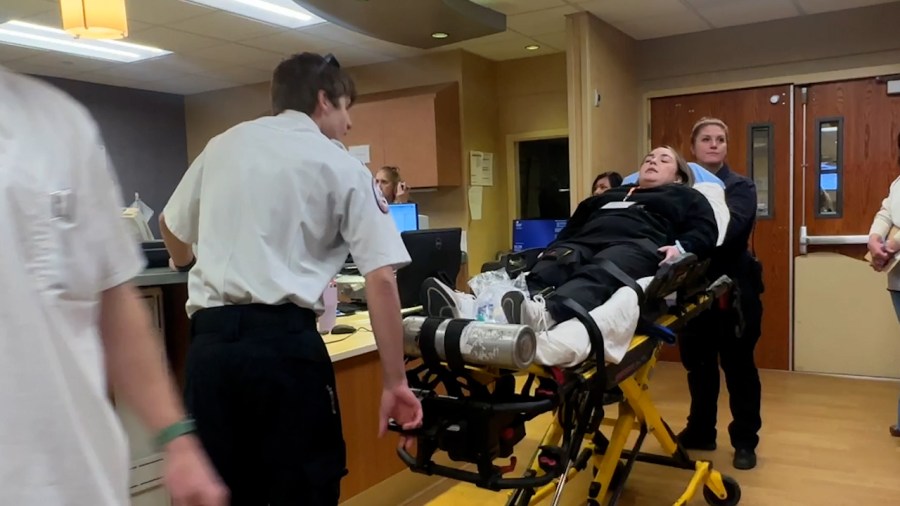

(COLORADO SPRINGS) — Three major hospitals in Colorado Springs engaged in a comprehensive disaster preparedness exercise aimed at evaluating and refining their response to potential real-life emergency scenarios.
CommonSpirit Penrose Hospital, St. Francis Hospital, and St. Francis Hospital – Interquest actively participated in the drill, which was conducted in collaboration with the FBI to assess the readiness of their teams and systems.
The drill simulated a hypothetical bioterrorism event where a deadly bacteria, Botulinum, was intentionally introduced into the city’s milk supply, resulting in multiple areas being affected and a surge of patients seeking medical attention.
Actors and volunteers posed as patients with various symptoms associated with botulism. This allowed emergency staff to practice responding to the influx of patients and treating them as if their lives were in immediate danger.
“So really testing the readiness of our teams to respond to any sort of emergency that may be coming into our hospitals,” said Andrew Ritz, Vice President of Operations at CommonSpirit Health, Colorado Springs.
David Autry, FBI Weapons and Mass Destruction Coordinator emphasized the crucial role hospitals play in identifying and responding to potential threats.
“The hospitals are the first line of defense that often identifies an event occurring. That information, they then send it over to public health, who then coordinates with the FBI to determine if this is a naturally occurring event or if this is possibly an intentional act,” said Autry.
The exercise also served as a platform for practicing threat identification, particularly given the challenge of promptly identifying and addressing the symptoms of botulism, which are commonly misdiagnosed. Autry underscored the importance of rapid and accurate threat identification, stating, “So they have a very difficult job of quickly trying to identify what the threat is and making sure that that gets to the right partners.”
While Wednesday’s drill focused on a specific bioterrorism scenario, it serves as valuable practice for responding to a wide range of large-scale incidents, for example; an accident involving a bus full of passengers, major fires, or other situations where there could be a sudden influx of patients requiring urgent medical attention.
Past incidents like the Club Q and the Planned Parenthood mass shootings underscore the importance of preparedness and collaboration among emergency responders in swiftly and effectively managing crises of varying nature and scale.
“Whether it be a mass shooting, a WMD (Weapons of Mass Destruction) incident, some type of biological attack, all of these preparations, all of these exercises, it just brings people together… it just brings about muscle memory, puts names with faces, and everybody understands what everybody’s capability is,” said Justin Gerken, FBI Supervisory Special Agent.
Despite the intensity of the exercise, all hospitals remained fully operational throughout, ensuring that regular patient care was not compromised.