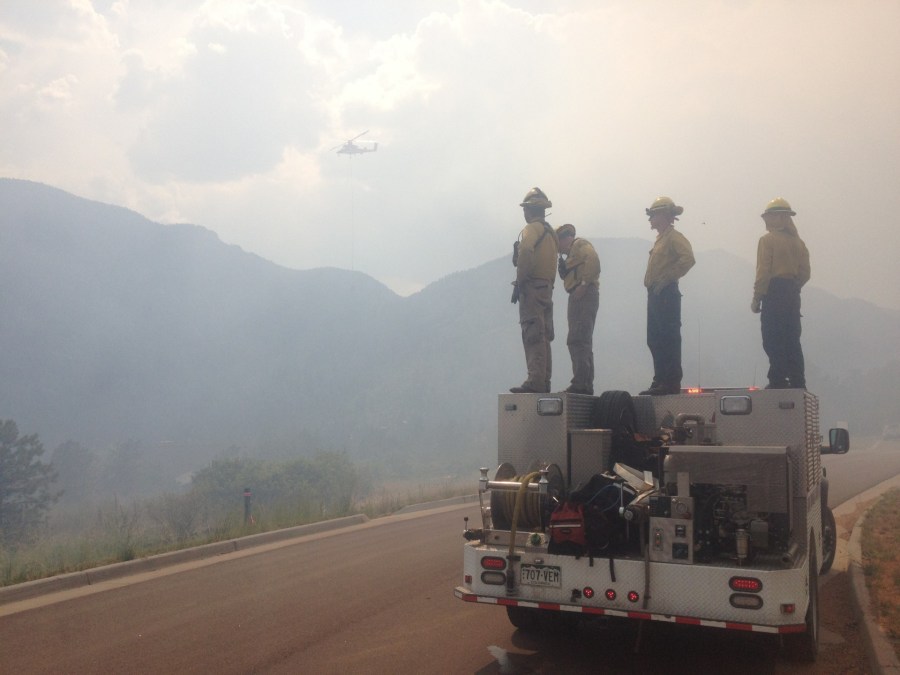

(COLORADO) — Wildfires across the western United States and including here in western Colorado, have been a growing concern this season. These fires, fueled by hot and dry conditions, are the cause. While smoke and fire weather can often be forecasted into our communities here, the real challenge comes on the ground where firefighters work tirelessly to contain the flames.
Wildland Firefighter Adam Drake said Colorado’s rugged terrain and mountain topography add unique challenges.
“With the way fire spreads, it is very dependent on topography. Is a fuel continuous? Is it going up a hill? Obviously, heat rises, so we’re worried about that. So if you have a steep slope and fire below it, the heat is slowly making the fuels above it more likely to ignite,” Drake said.
Understanding how fire behaves is only the first step. Firefighters often put in long hours on the ground, working by hand to stop flames from climbing higher into the mountains.
“A lot of times we’re 15, 20 guys in a line and we’re digging the grass or the fuel away from the fire and we’re getting down to mineral soil. And that’s another way to create a fire break. We’re actually on the ground digging a line and creating that break between fuel, which is combustible, and mineral soil,” Drake explained.
While ground crews work tirelessly, aerial resources also play a crucial role in wildfire suppression and containment. Planes and helicopters can drop both water and fire retardant, depending on the conditions.
“When we use aerial resources on a fire, there’s typically a water resource or a retardant resource. Water will actually be directly dropped on flames to extinguish flames. Whereas the retardant is usually dropped in front of the flames and it pre-treats the fuel ahead of the fire,” Drake said.
In Colorado, firefighting is all about teamwork, but also combining strategies on the ground with support from the air to stay ahead of the flames and protect both the mountains and nearby communities.