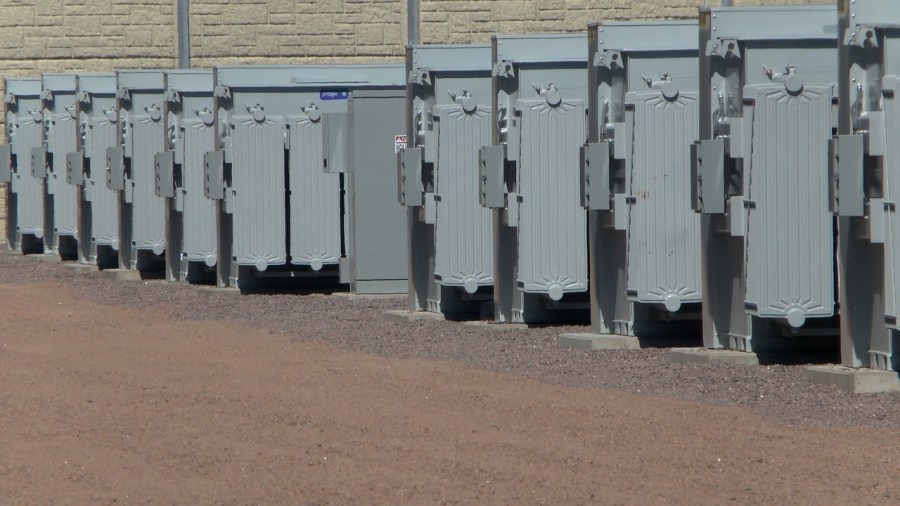

(COLORADO SPRINGS) — The first battery energy storage system is up and running in Colorado Springs. Experts say it’s a step toward the future for our utilities. They also say these sites play a key role in transitioning our energy from fossil fuels to more renewables.
The batteries can take leftover energy from devices like solar panels, and literally save it for a rainy day. “Batteries are going to be a future for us, and as they continue to develop technology, and how utilities utilize them, I think you’re gonna see more cost benefits to ratepayers than what we can even understand at this point,” said Colorado Springs Utilities Chief Executive Officer, Travas Deal.
Colorado Springs Utilities (Springs Utilities) says it can now get power during low-cost times and store it in the batteries, to use later when prices are higher, in turn saving customers money.
“You’re able to take energy from the grid at times of lowest demand. So, whether it’s solar energy, whether it’s wind energy, whether it’s energy from gas power plants that have excess energy at night, for example, you can store that energy in the batteries and use it when the grid needs it most. In times of peak demand, when it’s hot outside, when people are running their air conditioners,” said Jim Shandalov, The Vice President of Origination at NextEra Energy Resources.
A subsidiary of NextEra Energy Resources will own and operate the roughly 16-acre site, located in eastern El Paso County in Peyton. NextEra Energy Resources says it’s one of the country’s largest energy infrastructure companies.
This site can store enough to power about 20,000 homes for four hours, during a busy, high-cost period, like the afternoon or evening.
“These batteries will charge and discharge on a daily basis, just like charging your iPhone. You charge it once a day, you use it, you charge it again. These batteries will do a very similar thing,” said Shandalov.
Shandalov says this change will help make our power grid more reliable, resilient, and efficient.
“Colorado Springs Utilities is, you know, trying to continue to meet the Colorado State energy goals. So, we’re continuing to look at ways to look at decarbonization long term, but that does come with a cost. So, we’re trying to find ways to try to meet the state’s mandates and do it the most cost-effective way,” said Deal.