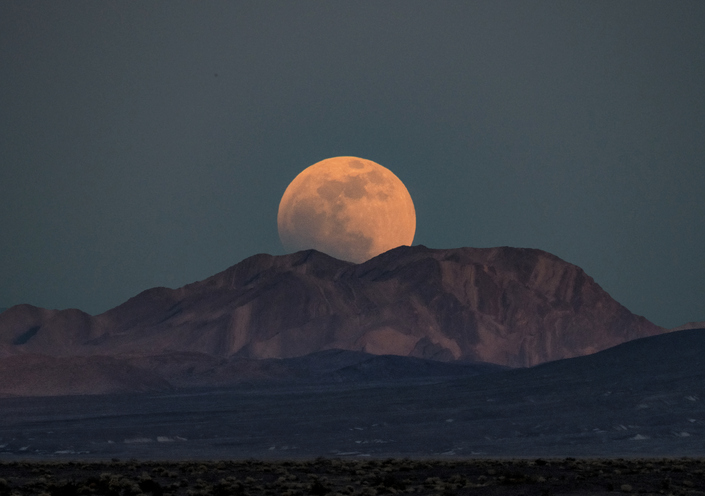

(SOUTHERN COLORADO) — Another day, another celestial event to look forward to. This time around, a supermoon will be making its presence known across the region. What makes it even more unique, however, is that it is also a blue moon.
The evening of Monday, Aug. 19 will feature the super blue moon. The ‘super’ portion of the phrase is referring to the moon being at its closest point to earth in its lunar orbit.
The ‘blue’ portion refers to the fact that there will be four full moons in this seasonal cycle. Typically we only see three, one per month, but due to the misalignment of cycle and orbit, every now and then there are four full moons. This phenomenon happens roughly every two and a half years.
There is another, widely accepted, definition of a ‘blue moon’ that details a period in which there are two full moons in one month. Historical differences in the definition over the years have blurred the lines a bit on which one is technically correct, but NASA largely recognizes the seasonal definition over the monthly one.
Of course, there are also some other special types of moons that we regularly see around these parts:
Blood Moon
Harvest Moon
Supermoon
Blue Moon
Occasionally, these unique moons coincide with one another, leading to an even more special set up like the one expected on Monday. Later in September, the region is expecting a ‘super harvest moon’ in which the moon will be full, close to Earth, and one of the closest full moons to the fall season.
As far as a ‘black moon’ goes, there are a few different definitions of the phenomenon as the phrase has gained popularity over the years. Here are two of the primary definitions that are largely accepted:
Black Moon – when there are no new moons in February. This occurs roughly once every 19 years and the next one is expected in 2033.
Black Moon – when there are no full moons in the month of February. This also occurs roughly once every 19 years and the next one is expected in 2037.
The black moon phenomenon can only happen in February due to its length of 28 days. Recall that a lunar cycle is 29.5 days, meaning that every now and then the month misses out on those two important phases of the moon.