
(NATIONAL) — High food prices and a looming SNAP freeze have made it necessary for many Americans to find ways to save on groceries and stretch the contents of their pantries. It turns out, our great-grandparents had plenty of ways to keep their pantries full as the autumn harvest ended and the winter months approached. And now is the perfect time to revisit those traditional techniques.
There are several reasons food spoils, including the growth of bacteria, molds, and yeasts, activity of food enzymes. Food preservation techniques prevent or slow spoilage by making the food inhospitable to microorganisms through preventing exposure to oxygen, changing the pH balance, and reducing or eliminating moisture.
Any type of preservation process comes with the risk of causing harmful microorganisms, which can cause illness. Make sure to carefully read any instructions or recipes and be aware of dangers with preservation.
Dehydrating
According to the National Center for Home Food Preservation (NCHFP), evidence has been uncovered showing that people in the Middle East and Asia have been drying foods as early as 12,000 B.C. Traditionally, people would lay food out in the hot sun to let the air and heat naturally dry it. Today, a simple dehydrator can be bought for as low as $30, making the process faster, easier, and accessible year-round.
Bacteria, yeast, and molds require sufficient moisture to grow and cause spoilage, and dehydration prolongs the life of foods by reducing or removing that moisture.
Dehydrators are designed to speed up the food drying process at 140 degrees Fahrenheit – hot enough to force out moisture, but not enough to cook the food. When using a dehydrator, it is possible to make fruit leather out of purees and jerky out of meat strips. The oven can also be used to dehydrate food.
Dried foods are ideal for backpacking and camping, as they are lightweight and take up little space. Dried foods can be eaten as-is for snacks or rehydrated and added to recipes.
Buying in bulk and dehydrating food is a great way to keep it on hand for long periods of time. There are plenty of guides and recipes online for instructions on various foods. Just be sure to properly store it to prevent it from rehydrating or attracting insects.
Curing is a form of dehydration that uses salt to draw the moisture out of meat instead of heat and air, and is often combined with smoking, such as when making bacon or ham.
Freezing
Most Americans freeze some portion of their food to keep it on hand until they are ready to use it, and it is one of the easiest and most convenient methods of preservation, but there are still some things that can be learned about freezing food.
Freezing preserves food by reducing the temperature to a point where the water inside it solidifies into ice, making an inhospitable environment for microbial growth. It’s important to understand that freezing doesn’t sterilize food, so any spoilage process that began before freezing the food will continue after thawing. This is why it’s crucial to store food at the right temperature even before freezing it.
Most vegetables should be blanched before freezing them. This is done by scalding them in boiling water or steam for a short time to stop enzyme interactions that cause loss of flavor, color, and texture. Blanching time varies between vegetables and size, but it’s easy to find information online that can guide you in the process. Other foods, such as fruit, meat, seafood, eggs, and some dairy products, may need special preparation to keep their quality in the freezer, so it’s good to do an internet search before freezing something for the first time.
With the right conditions, you can store frozen food for months before it starts to lose quality, though the amount of time varies with different foods.
Canning
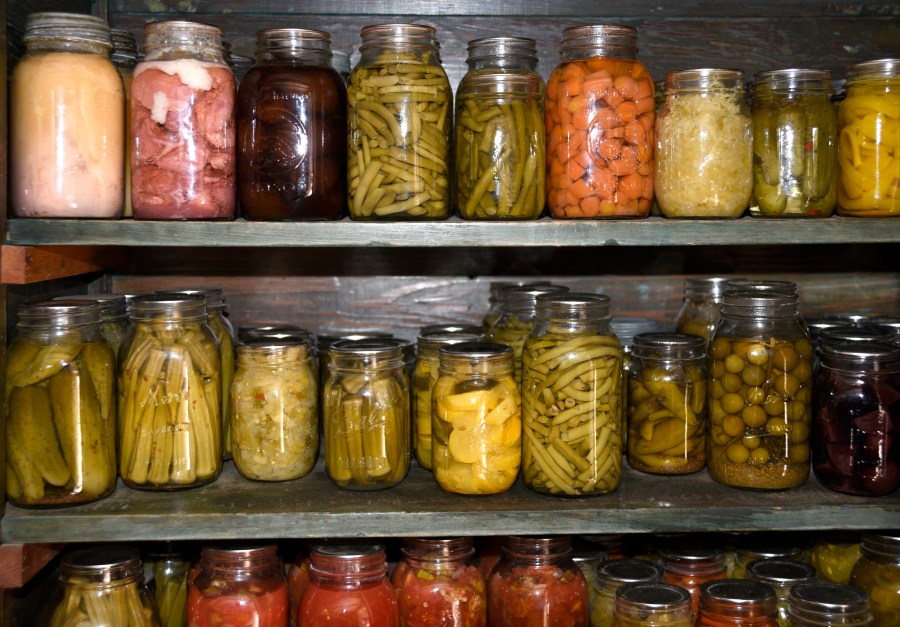
A great way to preserve food’s flavor, quality, and nutritional value is through canning. Fruits and vegetables can be canned, as can sauces, jams, and jellies, nuts, and meats.
Canning preserves food by destroying microorganisms through carefully selecting, washing, and preparing foods, and hot packing or brining. Growth of bacteria, molds, and yeasts is then prevented by creating a high vacuum in sealed jars.
It is very necessary to do your research and follow safe practices for canning, as when things go wrong with canning, they can be deadly. The bacteria that cause botulism are on most fresh food surfaces and can survive harmlessly in soil and water for many years. Because the spores only grow in the absence of air, they are harmless on fresh food, but become poisonous in a vacuum. Because of this, it is extremely important when home canning to buy food that is not already showing signs of spoilage, thoroughly clean and prepare the vegetables or fruit, and follow instructions religiously to reduce the bacteria before vacuum sealing them.
When canning, it is recommended to use glass, Mason-type, threaded, home-canning jars. It’s possible to can with metal containers, but unlike glass jars, they can only be used once, and require pricy equipment.
While commercial jars from products like mayonnaise can be used with the right lids, they are prone to breakage and faulty seals. Make sure to thoroughly clean your jars before using them.
There are two main kinds of canners for heat-processing and sealing home-canned food: boiling-water canners and pressure canners. Boiling-water canners are made from aluminum or porcelain-covered steel and have removable racks and fitted lids. They must be deep enough that 1 inch of boiling water will cover the tops of the jar lids. Old pressure canners used to be heavy and clunky, but newer models have been streamlined to be lighter and more user-friendly.
Pickling
Pickling is done by preserving foods in vinegar or other acids, adding a sour-tangy flavor to fruits, vegetables, and other foods. Spices can be added to increase the depth of flavor.
The level of acidity used to pickle products is crucial, so it is necessary to use established recipes for pickling and not alter the ratios indicated, and measure carefully to prevent spoilage and the growth of dangerous bacteria. Additionally, only use food-grade 5% acidity vinegar for home canning. Don’t use homemade vinegar, as the acidity can vary.
Select fresh, firm fruits or vegetables without any spoilage, and if using cucumbers, cut off the flowering ends to keep them from softening.
There are two primary methods for pickling with vinegar: quick-pickling, also known as fresh-pack or refrigerator pickling, and canned pickling. With quick-pickling, you pour a heated brine over produce to quickly start the pickling process, and immediately store it in the refrigerator. When using the canning method, the jars are filled with the ingredients and vinegar brine, then sealed and heated in a water bath canner to prepare them for long-term shelf-stable preservation.
Fermentation
Nearly every culture since ancient times has developed some form of fermentation. Fermented foods have played a key role in many societies, whether through fermented drinks, such as beer and wine, or foods such as kimchi or sauerkraut. Fermentation is a valuable food preservation method, as it not only stretches food supplies but also increases their nutritional value. And as any fan of a good cheese knows, it adds plenty of flavor.
While other forms of preservation seek to reduce or eliminate microorganisms, fermentation’s goal is to increase the growth, so long as it’s the right kind of microorganism. This is done by creating an environment that encourages beneficial bacteria and molds to grow and discourages harmful bacteria.
The world of fermentation is so vast that it is impossible to cover every type of fermentation in one article. Adventurous home cooks can explore anything from home brewing beers and ciders to fermenting dairy into yogurt or dry-aging their own beef. As always, it’s important to do thorough research and follow instructions closely.
One of the easiest entries into fermentation for beginners is lacto-fermentation, a safe and economical way to preserve food that has been used for centuries.
The goal in lacto-fermentation is to submerge the vegetables in a salty solution and eliminate their exposure to air, creating the ideal environment for lactic acid, the beneficial bacteria that facilitate fermentation, to grow.
Lacto-fermentation requires fairly simple equipment, consisting of a jar, a lid, and a weight, as well as either measuring spoons or a kitchen scale. As the jars won’t be subjected to heat or pressure, any clean jar will do, as will any lid that fits. Budget-conscious home-fermenters can use a sterilized rock as a weight, but it’s easy to find affordable fermentation weights. Full fermentation kits that provide all necessary equipment are also available.
There are countless fermentation recipes and guides online. The most important aspects to pay attention to are the ratio of salt to water and making sure all ingredients are fully submerged. Keep the lid loose enough that gas can escape and store it in a room where the temperature stays ideally between 68 to 72 degrees Fahrenheit. Within a week or two, you have a tasty treat.
Food preservation is a valuable way of stretching food and saving money. The list above is not exhaustive, and nearly every type of food has several ways it can be preserved. With the uncertainties surrounding food prices and supplies, it helps to have alternative ways to keep the pantry full.