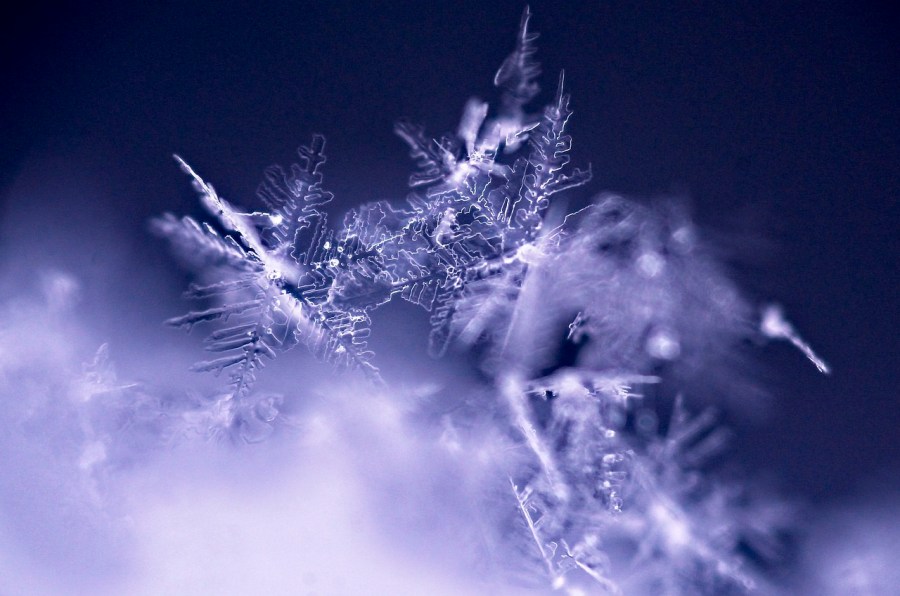

(SOUTHERN COLORADO) — Sometimes when it snows we’ll get those picturesque flakes. However, other times, it seems like it’s just pellets falling from the sky. So what gives? Why is there a difference in each snowstorm?
The answer: cloud physics! In basic terms, a snowflake starts as a water molecule that tries to attach to a particulate. These particulates include pollen, dust, smoke, ash from volcanoes, and even algae that have evaporated from bodies of water, just to name a few. After that molecule attaches to something, it eventually hits a freezing layer, freezes, and then attaches to another frozen water molecule building repeatedly until it becomes “heavy enough” to overcome wind in the sky and fall to the ground. Fun fact, the reason snowflakes are symmetrical is they are actually just following the same molecular structure of H2O!
You might have heard that no two snowflakes are alike but there’s more to that. Snowflakes actually have different structures, called crystalline habits, based on the composition of the atmosphere. Different humidity levels, pressure, and temperature dictate what kind of snowflake you can get. The habits (in the image below) include plates, needles, hollow columns, stellar plates, and dendrites.
In brief, here’s which type corresponds to a certain temperature:
32 to 25 degrees: Thin Plates
25 to 21 degrees: Needles
21 to 14 degrees: Columns
14 to 10 degrees: Stellar Plates
10 to 3 degrees: Dendrites (what most folks think snowflakes look like)
3 to -8 degrees: Stellar Plates
Below -8: Hollow Columns