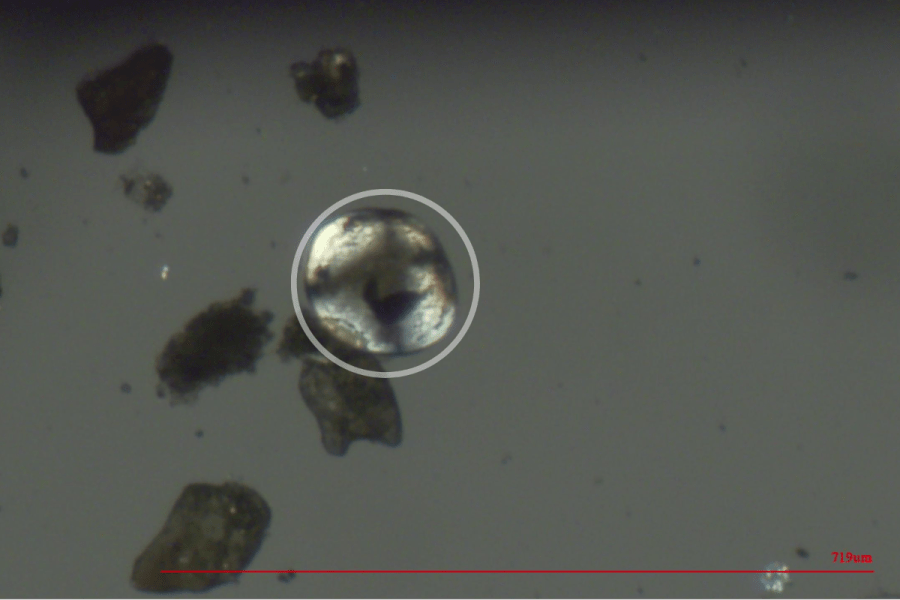

(GRAND JUNCTION, Colo.) — Colorado Parks and Wildlife (CPW) said it recently found Zebra Mussel larvae in the Colorado River and Government Highline Canal near Grand Junction and is asking the public to help stop the spread.
CPW said on July 1, CPW staff collected a plankton sample from the Government Highline Canal and found a suspected zebra mussel veliger and further analysis confirmed the sample was positive. Two other tests on July 8 on the Colorado River upstream of the Grand Valley Water Users Canal diversion were also positive for zebra mussel veliger.
According to CPW, these locations are now considered “suspect” for the presence of zebra mussels. Zebra mussels pose a risk of ecological impacts as their feeding can strip food for native fish populations. The mussels also pose a risk to infrastructure as mussels are difficult to remove and can reproduce rapidly causing clogged water infrastructure.
Zebra mussel larvae can only be seen under a microscope, no adult zebra mussels have been found so far, according to CPW.
“This challenging discovery has ecological and economic impacts not only on the Grand Valley but potential statewide impacts as well. CPW is committed to working with all of our partners as we work to better understand the extent of this discovery and the next steps in protecting the natural resources and infrastructure,” said CPW Director Jeff Davis.
CPW is working with other organizations on the next steps, including alerting users of the river with signs at river access points starting in the De Beque Canyon to the Loma Boat Ramp. CPW is also asking anyone boating, floating, paddling, or fishing in the Colorado River to clean, drain, and dry their vessels and equipment after getting out of the river.
More information on how to clean water equipment can be found on CPW’s website.