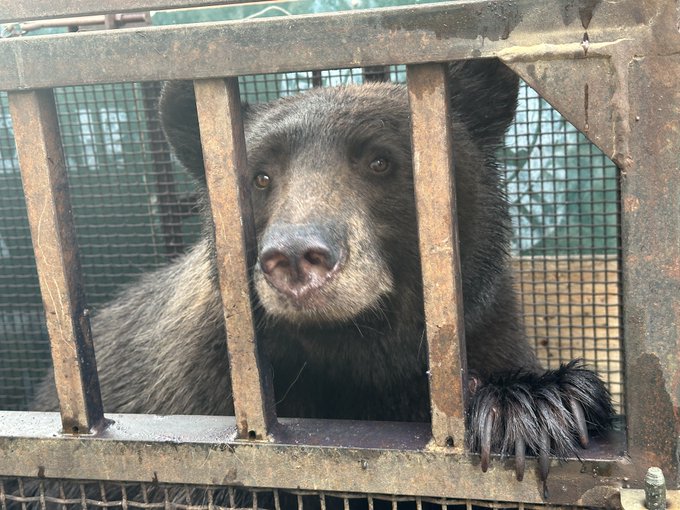

(DURANGO, Colo.) — Colorado Parks and Wildlife (CPW) had to relocate a sow and three cubs who were getting “too comfortable” in Durango on Friday, Aug. 23.
According to CPW, they don’t like to trap and relocate bears but the cubs were taught some bad habits. CPW said via X (formerly known as Twitter), that the bear family relocated to the town mainly because of human food sources, primarily unsecured trash.
A black bear’s natural diet consists of berries, fruits, nuts, plants, and grasses that grow naturally in the forest — not trash. Bears are only driven to search for other food sources when one becomes scarce and the bear can overcome its fear of humans.
Each day, the bears would push the limit a bit more in residential areas according to CPW, thus, to get them out of trouble and away from the community the bears were relocated out of town.
CPW reminds individuals that as Colorado enters cooler weather due to fall, black bears are entering hyperphagia — an increase in feeding activity driven by biological need —and will spend up to 20 hours a day trying to search and eat as much food as possible to fatten up for the winter.
Hyperphagia makes bears need a total of 20,000 calories, which equals 20 chicken sandwiches, 10 large orders of french fries, 10 soft drinks, and 10 milkshakes from a fast-food chain.
Over half the incidents reported in 2023 occurred in August, September, and October. CPW wants individuals to be bear-aware and vigilant as more bear activity may be seen in urban areas.
To move the bears away from trash and urbanization, CPW officers had to tranquilize the sow and the cubs. They were all fitted with an ear tag and had a health exam performed. The sow was estimated to be between four to eight years old.
The bears were given a reversal drug to wake them up, and after an 85-mile drive, all four were released into a “spectacular” bear habitat somewhere in the Southwest Region. CPW said they consider the area to be one of the best bear habitats in the state — and they rarely hear of these bears again.
As shown below, one of the cubs took off quickly while two needed a little more convincing before also joining the other bear.
This fall, bear-proof your home and secure any chickens, bees, and livestock. To bear-proof your home you can:
Keep garbage in a well-secured location. Only put out the garbage the morning of pickup.
Clean garbage cans regularly to keep them free of food odors, ammonia is effective.
Keep the garage door closed, and don’t leave any pet food or stock feed outside.
Don’t hang bird feeders from April 15 to Nov. 15.
Don’t allow bears to become comfortable. If you see one, scare it off by yelling or making loud noises.
Secure compost piles, bears are attracted to the scent of rotting food.
Clean the grill after each use, and clean up thoroughly after cookouts.
If you have fruit trees, don’t allow the fruit to rot on the ground.
After releasing the cubs, the sow was also released shortly and joined the three bears.
To learn more about becoming bear-aware, or to look for other suggestions to keep your home or livestock safe from bears click the link above.