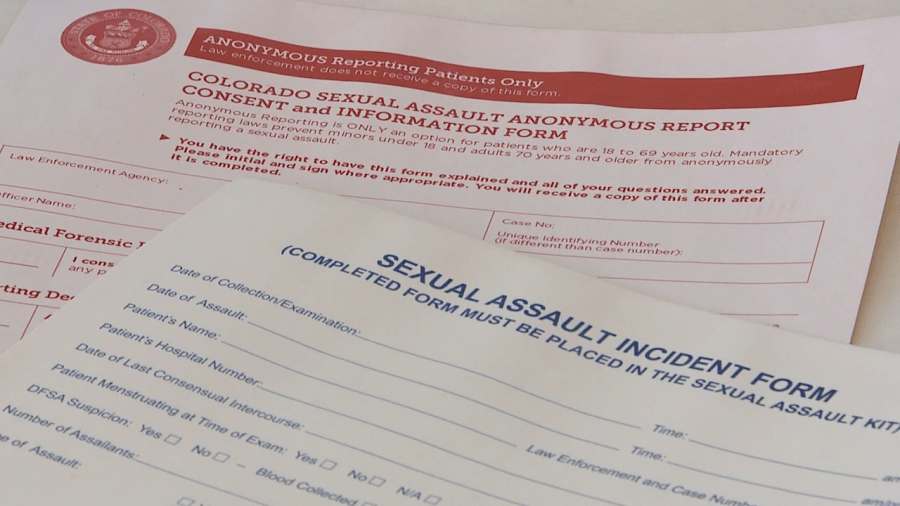

DENVER (KDVR) — The Denver Police Department announced it is now going to independently review hundreds of sexual assault cases handled by former CBI analyst Yvonne “Missy” Woods.
The Colorado Bureau of Investigation is currently in the process of reviewing more than 10,000 cases Woods worked on in almost 30 years with CBI. So far, CBI has already found 1,003 cases impacted by her alleged misconduct. Denver police are choosing to review their sexual assault kits that Woods worked on over a 12-year period, which is something the department is calling proactive.
A spokesperson for DPD shared the following statement about the effort:
“Considering recent events and the allegations against former CBI Forensic Laboratory Scientist Missy Woods, the Denver Police Department Crime Laboratory has initiated a process to review the reports from at least 422 sexual assault evidence kits that were submitted by DPD to CBI and were tested by Ms. Woods over the past 12 years. Through this proactive effort, our crime laboratory will determine the number of sexual assault evidence kits it will re-test. Any offender profiles that may be discovered through re-testing will be submitted to the Combined DNA Index System (CODIS) for potential investigative leads, and all follow-up investigations will be conducted by Denver police investigators. We intend to collaborate with the CBI on our results of the review in the interest of working together to serve victims in the best way possible.”
FOX31 consulted its legal analyst, Christ Decker, about the re-testing.
“It’s ongoing fallout from the Missy Woods scandal, which has really rocked the entire Colorado judicial community in terms of scientific testing,” said Decker. “Just the process of going through hundreds and hundreds of cases is not only time-consuming, but extremely expensive above and beyond the alarming concerns that this raises for fundamental fairness for these defendants.
CBI shared the following statement with FOX31:
“The Colorado Bureau of Investigation welcomes the initiative taken by the Denver Crime Lab to review all cases it sent to the CBI forensics lab where DNA work was performed by former DNA scientist Yvonne ‘Missy’ Woods. As the CBI has previously shared, it’s conducting an exhaustive ongoing review of the more than 10,000 cases Woods worked on in her 29-year career. So far, the CBI has identified 1,003 cases impacted by her alleged misconduct and continues to do more follow-up work to determine if there may be other impacted cases. CBI continues to share those findings with affected law enforcement agencies and district attorneys statewide. We welcome the opportunity to work with the Denver Crime lab in its assessment to determine if any Denver PD cases warrant retesting.”
FOX31 asked District Attorney for Colorado’s 23rd Judicial District George Brauchler for some perspective.
“I think it’s absolutely necessary, I think it is tragic and an avoidable tragedy that we’re going through this,” Brauchler said. “And it’s not just the system. I mean, I want you to picture victims of crime who maybe days, weeks, months, years ago thought that the person that victimized them was for other forever, either locked up or held accountable.”
Colorado Representative Jenny Wilford spoke out earlier this year about the backlog of these kits in our state as a sexual assault victim herself.
“I think sexual assault, in my experience, is such an insidious case,” Wilford said. “And if there is anything missed, we deserve it. The survivors in those cases that are being taken back by Denver deserve to know and deserve the opportunity to pursue justice. If that’s what they want.”
Colorado passed a law in 2013 requiring all sex assault evidence kits to be tested, even those where the likelihood of prosecution was minimal.
“If I had to say that there was something to alleviate some of the concern of the public, it would be this retesting kits in general doesn’t mean that we’re talking about maybe exonerating the wrong person or the right person from a crime,” Brauchler said. “Many sex assault kits are generated from acts that are consensual or claimed consensual. So, what that means is it’s not a whodunit. It’s that the act happened. The DNA may be confirmatory, but it’s not going to be dispositive about whether the person committed the act. The crime ends up becoming a question of consent versus force or something like that. So these 422 cases, my guess, does not represent 422 whodunit rape cases where this was the pivotal evidence in the case.”