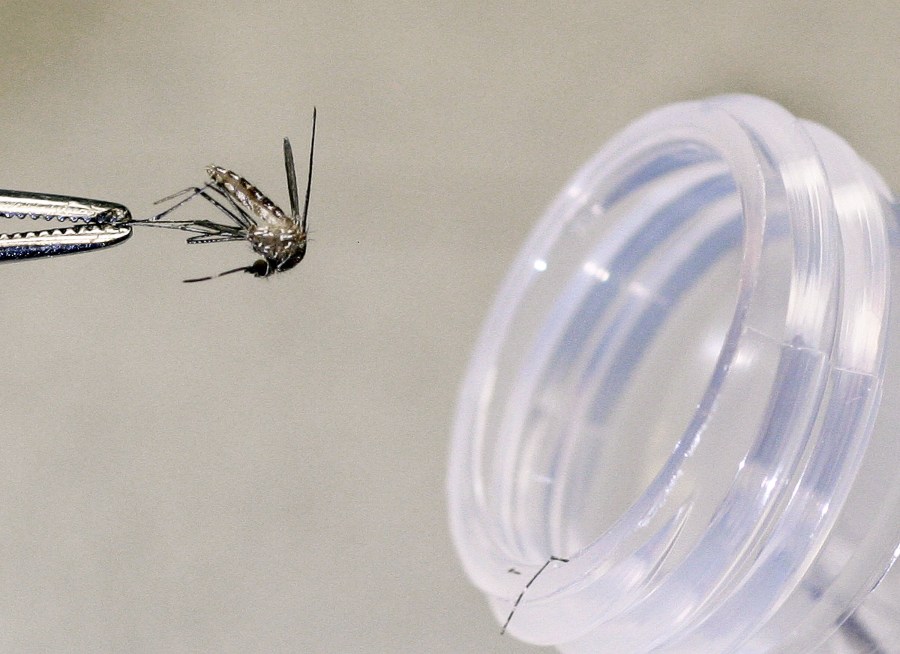

(COLORADO) — With summer in full swing, and individuals partaking in activities outside, the community should be aware of mosquito-borne viruses and how to protect themselves against them.
With the first human cases of West Nile virus confirmed in Adams County, officials are cautioning the community to be aware of infected mosquitoes. While only two people have been confirmed to have the virus, mosquitoes carrying it have been identified in Adams, Boulder, Denver, Larimer, and Weld County.
Colorado is no stranger to the virus — with the first case being recorded in 2002.
Risk to humans occurs primarily from June through early September due to mosquitoes being active. However, El Paso County Public Health (EPCPH) noted that in Colorado, most human cases are reported in August and September.
Most people get West Nile virus from the bite of an infected mosquito, which becomes infected when it feeds on infected birds.
The risk of infection is highest for those who work outside or participate in outdoor activities, as they become exposed to mosquitoes. However, people of any age can get the virus, with people over 50 having the greatest risk for severe disease. People with certain medical conditions, such as cancer, diabetes, hypertension, and kidney disease, and people who have received organ transplants are also at greater risk for serious illnesses.
In rare cases, the virus can cause serious brain infections like meningitis and encephalitis.
Symptoms can begin from two days to 14 days and often begin suddenly with high fever and headache that may progress into stiff neck, disorientation, tremors, and coma. According to EPCPH, one in five infected people will have flu-like symptoms which usually begins two to 14 days after exposure. Serious, potentially deadly neurologic illness occurs in fewer than one in 100 people.
Overall, the U.S. Centers for Disease Control and Prevention had reported a total of 49 West Nile virus in 2025 as of July 15.
To protect yourself against the virus, the public health department recommends:
Using an EPA-registered insect repellent, such as DEET, picaridin, or oil of lemon eucalyptus.
Limiting time outdoors during times of the day when mosquitoes are most active, typically around dusk and dawn.
Wearing loose-fitted, long-sleeved shirts and pants, especially when outdoors around dusk and dawn.
Use screens on windows and doors. Repair holes in screens to keep mosquitoes outdoors.
Individuals are also advised to frequently drain standing water from areas around the house, such as bird baths, portable pools, tires, planters, pet water dishes, and children’s swimming pools, as mosquitoes can lay eggs and grow in standing water.